Qiqushan Temple, Ancient temple in Sichuan Province, China
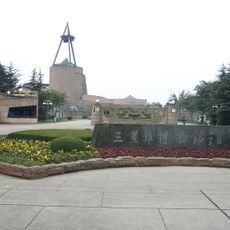
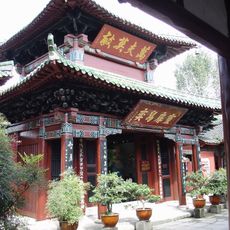
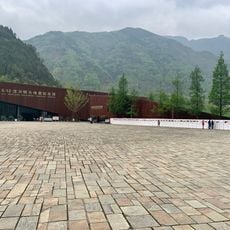
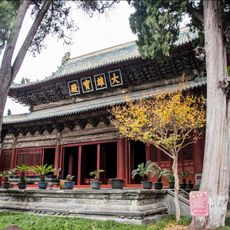
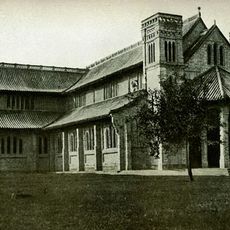
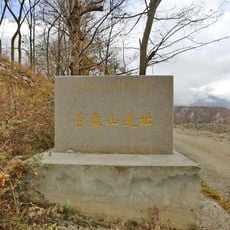
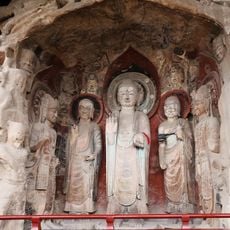
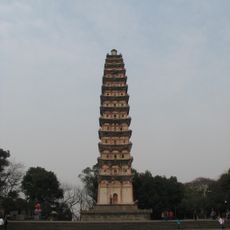
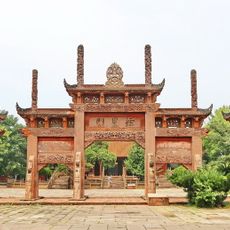
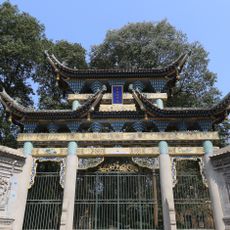
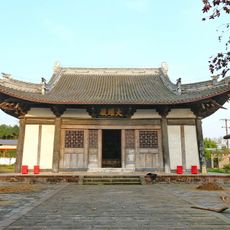
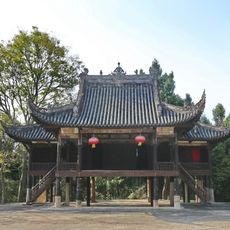
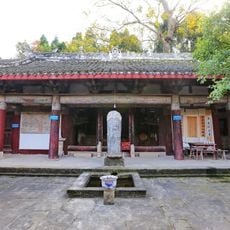
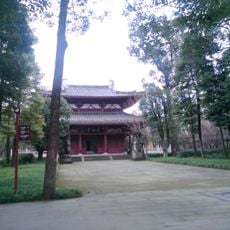
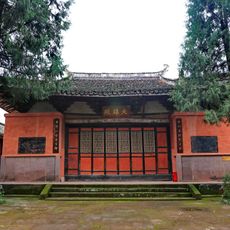
Qiqushan Temple (七曲山大庙) is a Taoist temple on Qiqu Mountain in Zitong County, Mianyang, Sichuan. Its 23 halls and pavilions cover 13,000 square metres within a 5,611-square-metre site, built on a hillside without a parallel central axis. The complex mixes Yuan, Ming and Qing buildings, from the Yuan Piantuo Stone Hall to Qing halls such as the main hall and Baichi Tower.
The temple was founded in the Eastern Jin dynasty as the Yazi Temple, dedicated to Zhang Yazi. In the early Yuan dynasty, after Zhang Yazi was named Emperor Wenchang, it was rebuilt as Wenchang Palace. The surviving halls date mainly from the Yuan, Ming and Qing dynasties. It was listed as a Sichuan provincial cultural relic in 1980 and as a Major Historical and Cultural Site Protected at the National Level in 1996.
The temple's name comes from Zhang Yazi, a local figure honoured here since the Eastern Jin dynasty; in the early Yuan dynasty he was given the title Emperor Wenchang, and the shrine was rebuilt as Wenchang Palace. The halls still serve Wenchang, the Taoist god of literature and examinations, and the site is approached through more than 20,000 ancient cypresses.
The temple grounds are generally open to visitors, with early morning being the best time to explore without crowds. Wear comfortable shoes as you will walk across uneven terrain and climb stairs to access different sections of the complex.
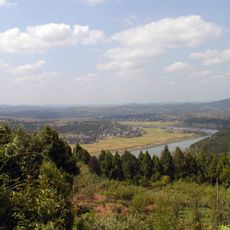
The temple stands beside more than 20,000 ancient cypresses, which form the largest cypress forest in China by area. The trees surround the halls on Qiqu Mountain and are the reason the approach to the temple is shaded for most of its length.
The community of curious travelers
AroundUs brings together thousands of curated places, local tips, and hidden gems, enriched daily by 93,874 contributors worldwide.