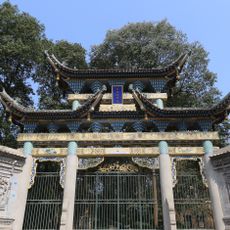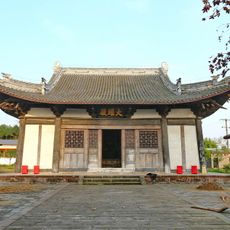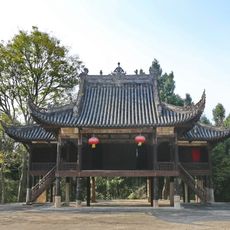
Huangze Temple, Buddhist temple in Guangyuan, China
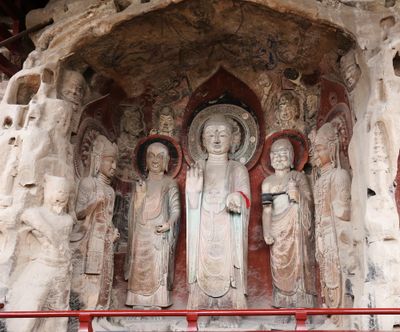
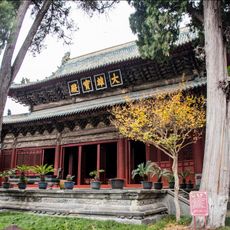
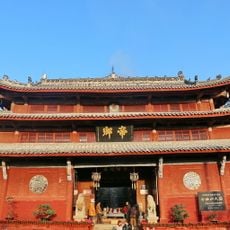
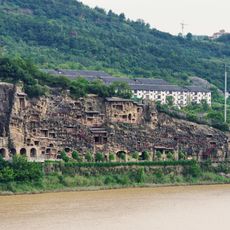
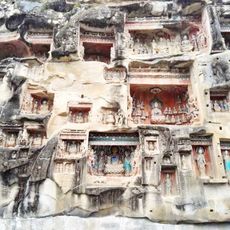
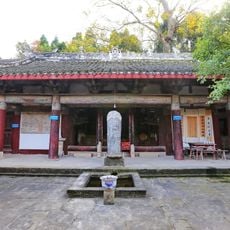
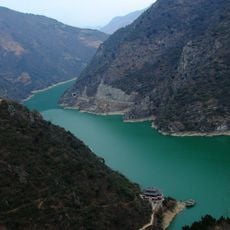
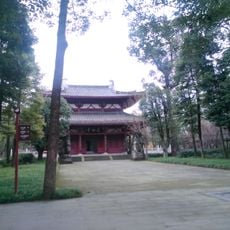
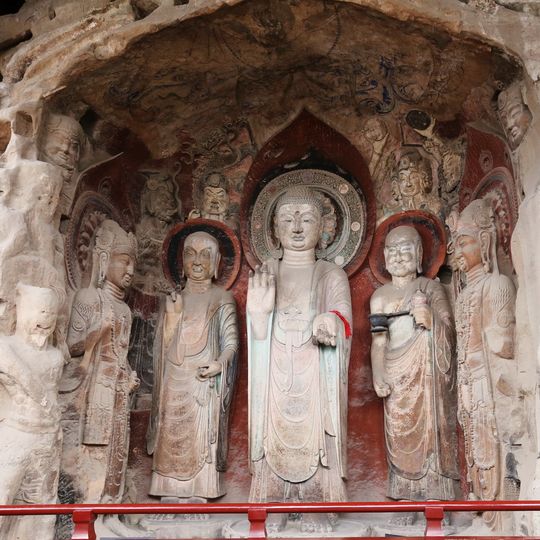
Huangze Temple is a Buddhist monastery carved into cliffs along the Jialing River in Guangyuan, featuring six caves and 41 niches that house 1203 stone sculptures spanning multiple dynasties. The caves ascend vertically from the river level to the summit, where the main building with its largest Buddha statue commands the entire site.
The temple originally bore the name Wunu and was renamed Huangze during the Tang Dynasty when Wu Zetian's father served as administrator of Lizhou County. This renaming reflected growing imperial patronage and transformed the site into a center of religious significance during a period of cultural flourishing.
The central grotto displays thousands of Buddha images across its walls, showcasing stone carving techniques that define the era of the Northern and Southern Dynasties. These works represent sacred art that shaped how later temples approached religious sculpture.
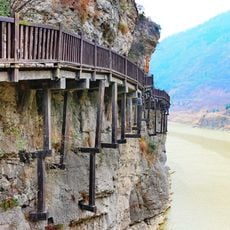
The temple is accessible from Guangyuan by crossing the Jialing River and hiking upward along the carved cliff face. Wear comfortable shoes and allow time to climb through the caves and explore the sculptures at your own pace.
The site holds a rare stone sculpture from the 8th century portraying Wu Zetian, China's sole female emperor, during her later years. This work stands as one of few surviving artistic records of this remarkable ruler created during her own period.
The community of curious travelers
AroundUs brings together thousands of curated places, local tips, and hidden gems, enriched daily by 91,655 contributors worldwide.