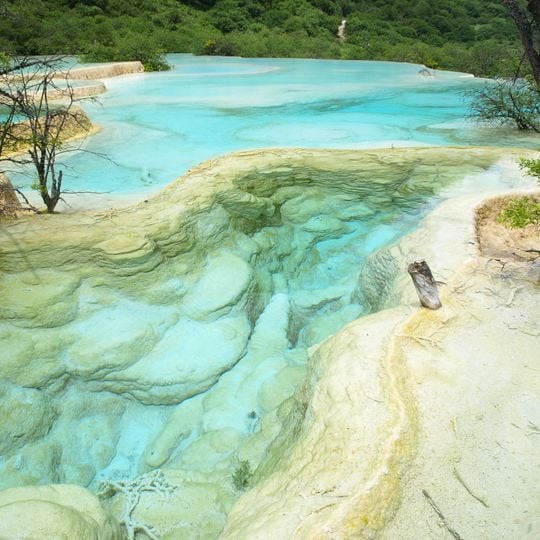
Huanglong, Protected area in Sichuan, China
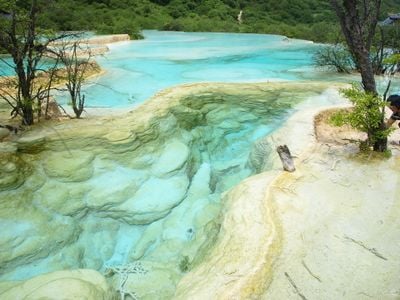
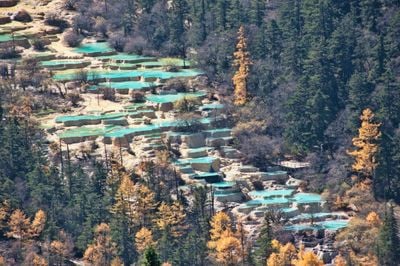
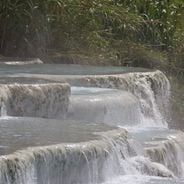
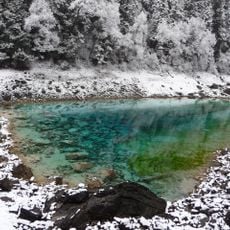
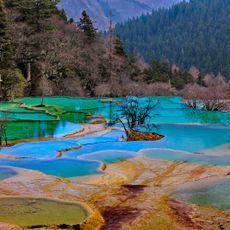
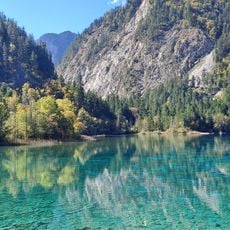
Huanglong is a protected valley featuring hundreds of travertine pools filled with mineral-rich water arranged across multiple elevations in natural terrace formations. These pools stretch between 3,000 and 4,000 meters high and create a distinctive geological landscape.
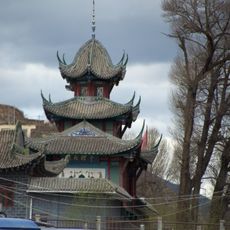
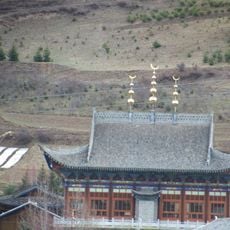
Huanglong was inscribed as a UNESCO World Heritage Site in 1992 for its travertine formations, waterfalls and limestone landscapes. It had already been named a Chinese national scenic area in 1982, and in 2000 it became a UNESCO biosphere reserve. Two Ming-dynasty temples survive in the valley: the Buddhist Huanglong Rear Temple and the Taoist Huanglong Middle Temple, together called Huanglong Temple.
The name Huanglong means "yellow dragon", after the golden travertine banks that wind up the valley like a dragon climbing snow-capped peaks. Two Ming-era temples stand in the valley: the Buddhist Huanglong Rear Temple and the Daoist Huanglong Middle Temple, together called Huanglong Temple. A Daoist temple built about 600 years ago, Huanglong Ancient Temple, sits just below the Five-Colour Pool.
A cable car service transports visitors to the upper section of the valley, offering an alternative to hiking the steep trails at high elevation. Plan your movement through the area carefully, as the high altitude can be physically demanding.
The travertine in Huanglong Valley runs 3.6 km and is said to resemble a golden dragon winding through snow-capped mountains. The main water body stretches 2.5 km from the old Buddhist/Benbo temple at the valley head down to the Guests Welcome Pond, between 30 and 170 m wide.
The community of curious travelers
AroundUs brings together thousands of curated places, local tips, and hidden gems, enriched daily by 93,934 contributors worldwide.