Bao'en Temple, Buddhist temple in Pingwu County, China
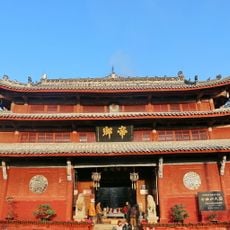
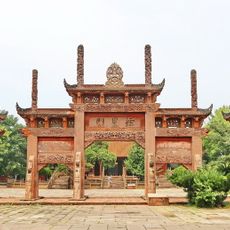
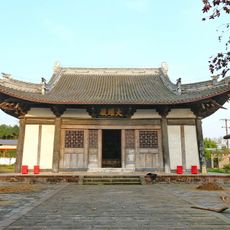
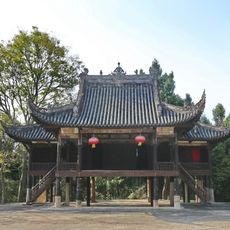
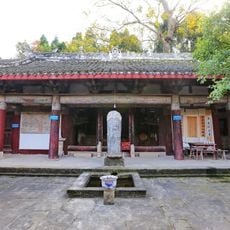
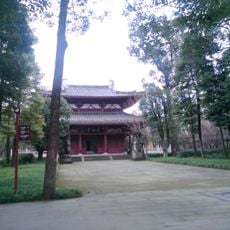
Bao'en Temple is a Buddhist temple complex in northwestern Sichuan Province featuring multiple halls, pavilions, and courtyards connected by covered galleries along a central axis. The structures employ 48 different types of dougong bracket systems, with more than 2,200 sets supporting and ornamenting the buildings.
A local chieftain named Wang Xi built the temple between 1440 and 1446 during the Ming Dynasty under Emperor Yingzong's rule. This construction represented a major display of power and influence in the region during that period.
The temple's name, Bao'en, means "repaying kindness", and its halls hold Ming sculpture, painting and murals finished by 1460. In Dabei Hall stands a nine-metre Guanyin carved from a single nanmu tree, with 1,004 clusters of hands and eyes; the whole complex was raised in nanmu wood.
The complex runs west to east, 278 metres long and 100 metres wide, with 3,518 square metres of building floor. Enter from the east end and follow the central axis through the Tianwang, Mahavira, Huayan and Wanfo halls; the galleries around the rectangular courtyards let you loop back. All wooden parts are nanmu.
Inside Huayan Hall stands an octagonal wooden revolving sutra cabinet that operates smoothly to this day. This functioning antique furniture piece is a rare surviving example of traditional craftsmanship from that era.
The community of curious travelers
AroundUs brings together thousands of curated places, local tips, and hidden gems, enriched daily by 94,122 contributors worldwide.