诺日朗瀑布

Log in to your account

AroundUs is a community-driven map of interesting places, built by curious explorers like you. It grows with every review, story, and photo you share.
Connect to save your favorite spots, contribute locations, and create personalized routes.
By continuing, you accept our Terms and Conditions and our Privacy Policy

诺日朗瀑布

Add to collection
Map
Suggest a change
Share

诺日朗瀑布, Mountain waterfall in Ngawa Tibetan and Qiang Autonomous Prefecture, China

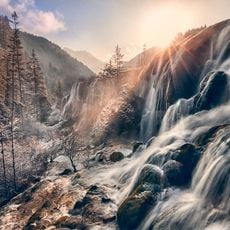
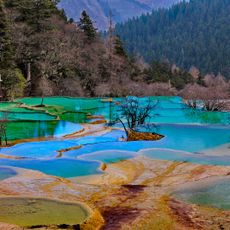
Nuorilang Waterfall is a broad cascade spanning about 270 meters wide with a drop of roughly 24.5 meters, situated at approximately 2365 meters elevation in Jiuzhaigou Valley. Water flows in multiple tiers, creating a layered structure of falls and pools.

The cascade formed through natural erosion over time, creating the wide structure seen today. A strong earthquake in 2017 damaged the water flow significantly, but restoration work in 2019 helped restore its natural appearance.

The name comes from the Tibetan language, meaning 'male deity,' reflecting how local people regard this waterfall with reverence. It holds special meaning for Tibetan and Qiang communities who consider it part of their sacred landscape.

Visit early in the morning when light is favorable for photography and crowds are thinner. Designated viewing platforms let you see the entire cascade comfortably without access difficulties.

During winter months, the cascade freezes and forms extensive ice sculptures across its full width. This rare phenomenon transforms the waterfall into a sparkling winter landscape.

Location: Ngawa Tibetan and Qiang Autonomous Prefecture

Address: Jiuzhaigou County, Ngawa Tibetan and Qiang Autonomous Prefecture, Sichuan, China, 623499

GPS coordinates: 33.25206,104.24384

Latest update: December 6, 2025 19:10

Photos
Explore the wonders of Sichuan in China

Sichuan Province in southwestern China contains some of the country's most important natural areas and cultural sites. Visitors will find major Buddhist temples on Mount Emei, the 233-foot (71-meter) Leshan Giant Buddha carved in the 8th century, and the Dujiangyan Irrigation System that has operated for over 2,000 years. The provincial capital of Chengdu serves as a base for exploration and hosts the primary giant panda breeding facility, along with historic streets and temples. The province is also known for its mountain landscapes, including the 24,790-foot (7,556-meter) Mount Gongga and the national parks of Jiuzhaigou and Huanglong, with their limestone formations and waterways. Wolong Nature Reserve and the research base in Chengdu allow observation of pandas in protected facilities. In Danba, traditional stone watchtowers stand in valleys, while Tagong Monastery represents the Tibetan heritage of the western region. The area provides a combination of natural attractions and historical sites with infrastructure for travelers of different interests. From temples and museums in Chengdu to mountain trails in the west, the territory spans different elevations and climate zones.

Reviews

Visited this place? Tap the stars to rate it and share your experience / photos with the community! Try now! You can cancel it anytime.

« 诺日朗瀑布 - Mountain waterfall in Ngawa Tibetan and Qiang Autonomous Prefecture, China » is provided by Around Us (aroundus.com). Images and texts are derived from Wikimedia project under a Creative Commons license. You are allowed to copy, distribute, and modify copies of this page, under the conditions set by the license, as long as this note is clearly visible.

Discover hidden gems everywhere you go!

From secret cafés to breathtaking viewpoints, skip the crowded tourist spots and find places that match your style. Our app makes it easy with voice search, smart filtering, route optimization, and insider tips from travelers worldwide. Download now for the complete mobile experience.

Around Us App Screenshot

A unique approach to discovering new places

Le Figaro

All the places worth exploring

France Info

A tailor-made excursion in just a few clicks

20 Minutes