Borken, Administrative center in North Rhine-Westphalia, Germany.
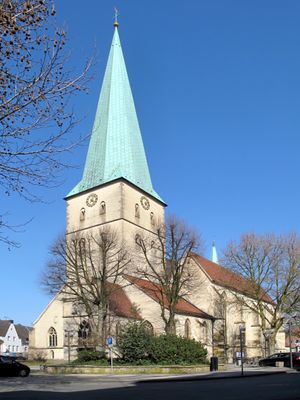
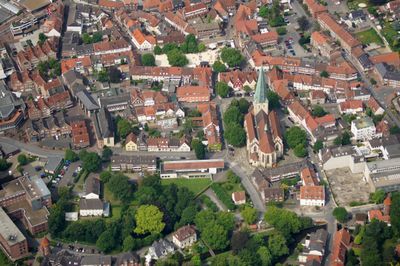
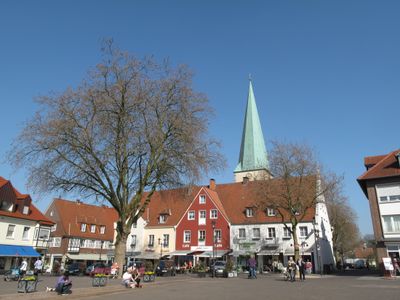
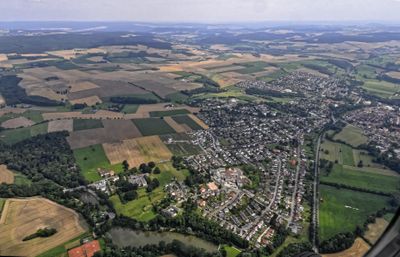
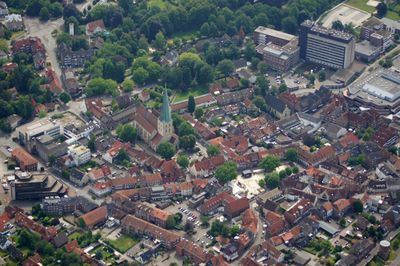
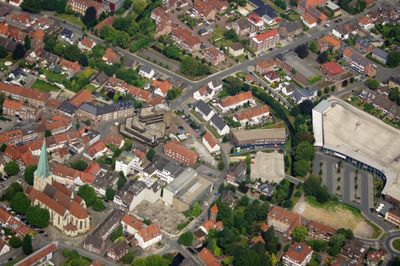
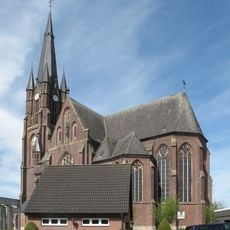
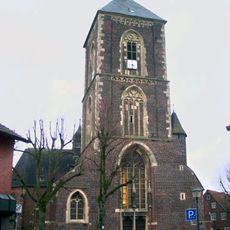
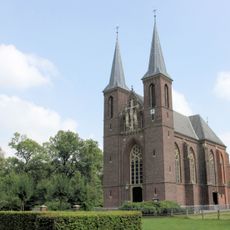
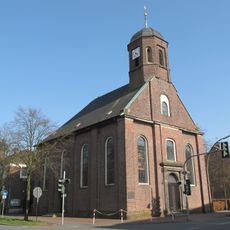
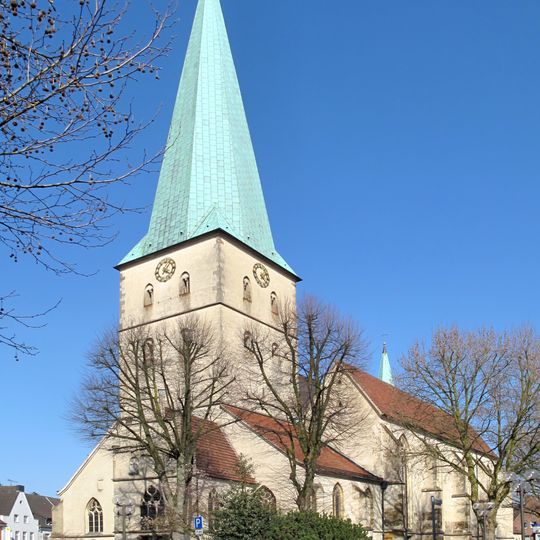
Borken is a district capital in North Rhine-Westphalia comprising twelve subdivisions and preserving sections of medieval fortifications. The Remigius Church rises in the center, surrounded by residential neighborhoods and commercial zones spreading along roads toward Coesfeld, Bocholt and Münster.
Bishop Dietrich II of Isenberg-Limburg granted city rights to the settlement in 1226, turning it into a regional trade hub. After the Napoleonic era ended, Prussia incorporated the town into the Province of Westphalia in 1815, shaping its administrative structure into the 20th century.
Partnerships with Albertslund in Denmark and Whitstable in England have shaped exchanges between the cities for several decades. Local associations organize regular meetings and maintain personal contacts across borders, reflected in street names and public events throughout the year.
The town core is easy to explore on foot, while outlying subdivisions are best reached by bicycle or car. The Remigius Church serves as a landmark in the town center, from which main streets branch out in all directions like spokes.
Between 1803 and 1806, the Principality of Salm held court here, one of the last territorial formations of the Holy Roman Empire in its final years. This episode transformed the town briefly into an independent principality before the Napoleonic reorganization of Europe dissolved it again.
The community of curious travelers
AroundUs brings together thousands of curated places, local tips, and hidden gems, enriched daily by 90,757 contributors worldwide.