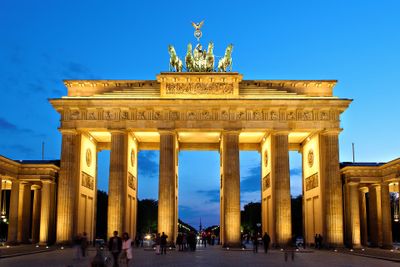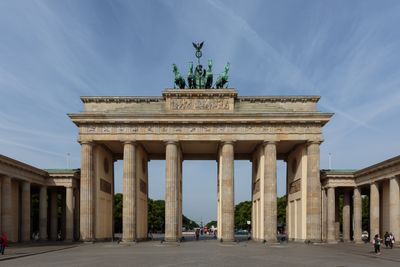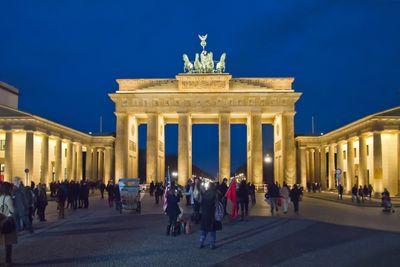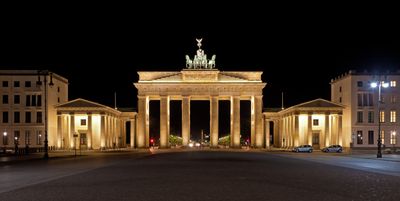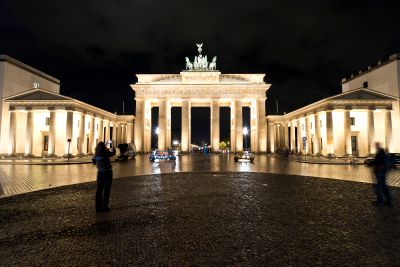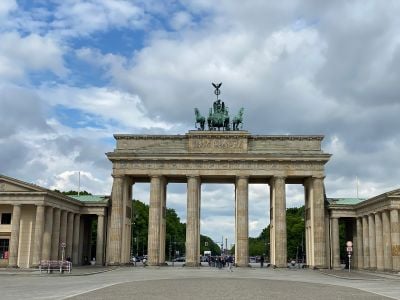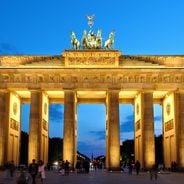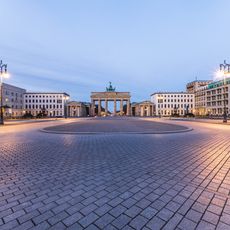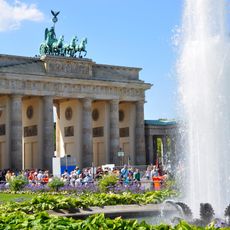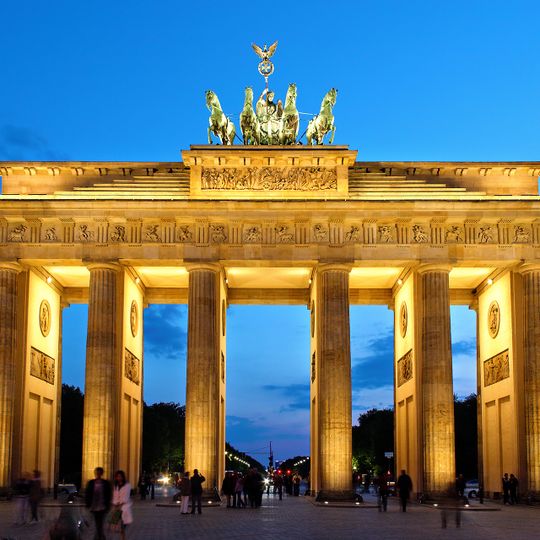
Brandenburg Gate, Neoclassical triumphal arch in Mitte, Germany.
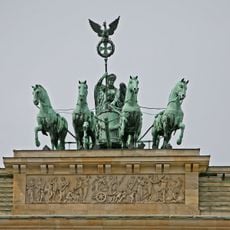
This gate is a classical stone structure in the Mitte district, supported on both sides by six Doric columns that form five separate passageways. The entire sandstone structure stands roughly 26 meters (85 feet) tall and is crowned by a bronze Quadriga with four horses.
King Frederick William II commissioned the gate between 1788 and 1791 to mark the western boundary of the city's customs wall. After World War II, it stood for decades between East and West Berlin and was only reopened for free passage in 1989.
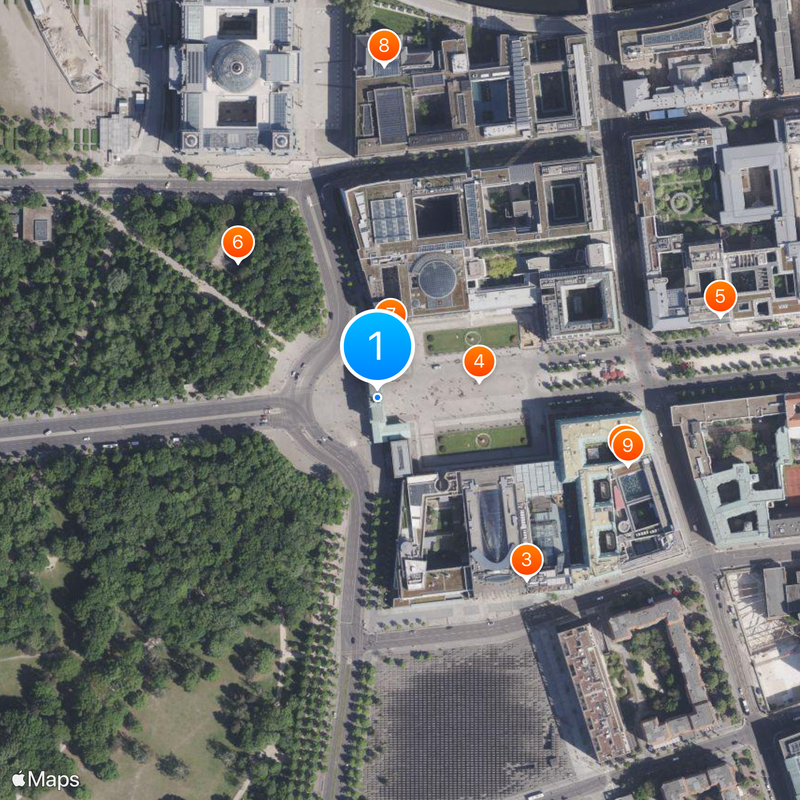
On New Year's Eve and during football celebrations, crowds gather in front of the gate and turn the square into a public stage for shared moments. Demonstrations and political rallies take place here regularly because the site plays a central role in the daily life of the capital.
The area around the gate remains accessible at all times and works well for early morning or late evening visits. The south wing houses a tourist information center that offers guidance on the city and surrounding areas.
The Quadriga on the roof was taken to Paris during the Napoleonic occupation and returned only in 1814. Afterward, the goddess Victoria received a Prussian eagle in her hand as an additional symbol.
The community of curious travelers
AroundUs brings together thousands of curated places, local tips, and hidden gems, enriched daily by 60,000 contributors worldwide.