Schloss Bevern, Renaissance castle in Bevern, Germany
Schloss Bevern is a Renaissance castle featuring a four-wing structure arranged around a central courtyard, protected by a water moat with two bridges connecting to the main building complex. The castle combines residential rooms, administrative areas, and a chapel within a unified layout that demonstrates its role as a noble residence.
Construction of the castle began in 1603 under Statius von Münchhausen and was completed in 1612, replacing an earlier manor house on the site. During the 17th century, Ferdinand Albrecht I later created one of northern Germany's first theater halls within the castle, reflecting its growing cultural importance.
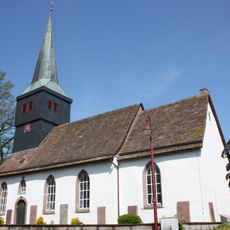
The castle's name comes from the von Bevern family, whose male line died out in 1588 with Brun-Arndt von Bevern. Statius von Münchhausen, who had secured the reversion of the fief in 1584, took over the estate in 1590 and built the present castle. His tomb is in the St. Johanniskirche in Bevern, which he enlarged.
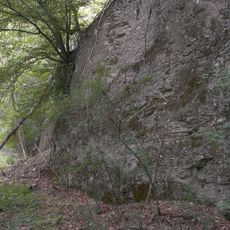
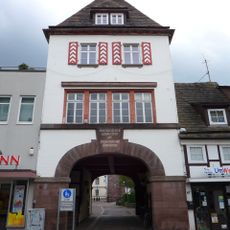
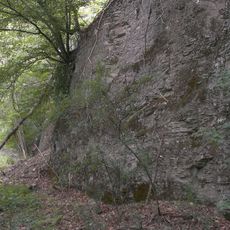
The four wings enclose an almost square inner courtyard; the upper floors were originally reached by two stair towers. The core building sits in a water moat crossed by two bridges, with the former castle garden to the east and remains of the gatehouse and castle barn to the west. Excavated medieval wall traces lie in the eastern part of the courtyard.
The castle's builder, Statius von Münchhausen, went bankrupt in 1618 after the Kipper- und Wipperzeit inflation and a debt claim of 240,000 talers. An imperial audit showed his assets of 1,320,565 talers exceeded his debts of 1,011,484 talers, restoring his honour but not his estates. His widow Dorothea von Bothmer defended the castle in 1640 with Brunswick soldiers, preventing its occupation during the Thirty Years' War.
The community of curious travelers
AroundUs brings together thousands of curated places, local tips, and hidden gems, enriched daily by 93,913 contributors worldwide.