Muskau Park, English garden in Bad Muskau and Łęknica, Germany and Poland
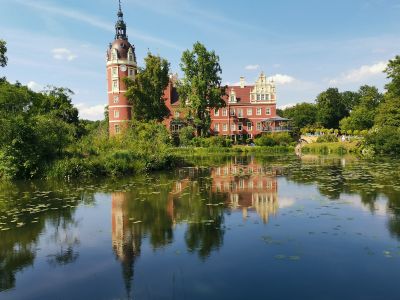
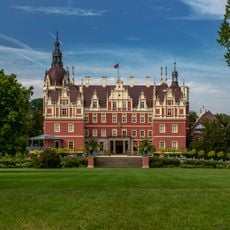
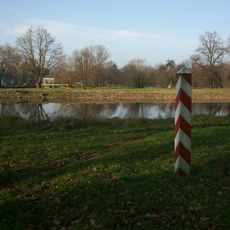
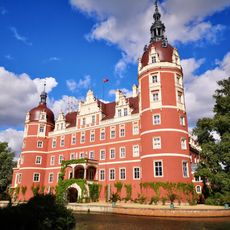
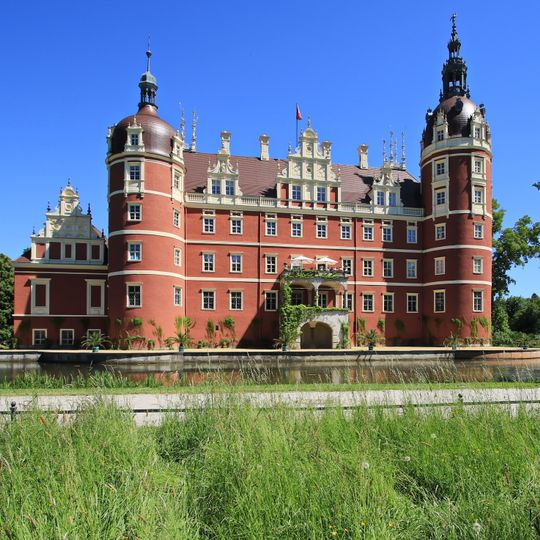
Muskau Park covers 830 hectares on both banks of the Lusatian Neisse, about a third in Bad Muskau, Germany, and the larger part near Łęknica, Poland. Its centrepiece is the Neues Schloss, a red-brick and cream-stone building with two domed towers, rebuilt in Neo-Renaissance style between 1863 and 1866. The park is the largest English-style landscape park in Central Europe.
A prince named Pückler-Muskau purchased this area in the early 1800s and spent years reshaping it into a garden—a new way of thinking about how to design an entire region. His ideas came from travels to English gardens, where he learned how nature and art could work together.
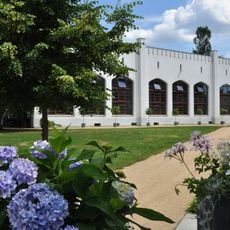
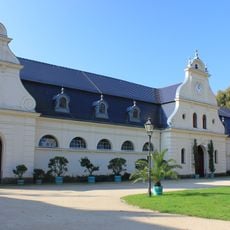
The park's name honours its creator, Prince Hermann von Pückler-Muskau, who in 1815 called on the citizens of Muskau to help lay out an English-style landscape park. The German side is managed by the Fürst-Pückler-Park Bad Muskau Foundation, based in the Orangery, a former brewery rebuilt in 1844 to designs by Gottfried Semper. The Polish section, around Łęknica, is looked after by the National Heritage Institute in Warsaw.
You can visit and explore both sides of the park freely—the German and Polish sections connect together. There are marked paths for walking, and those wanting more details can join guided tours or visit the palace.
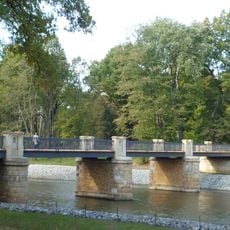
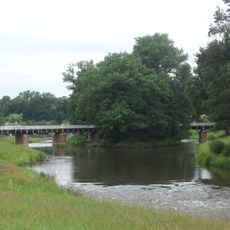
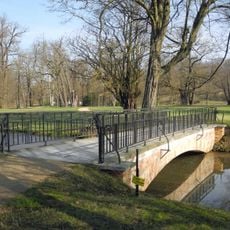
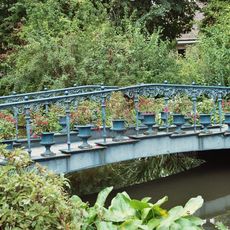
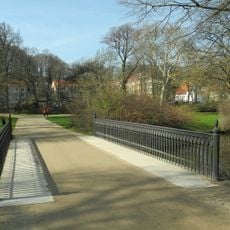
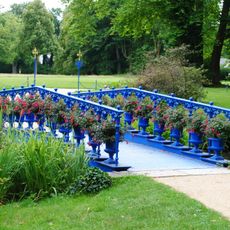
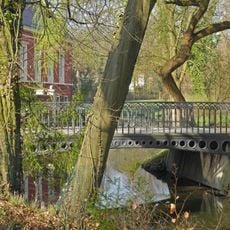
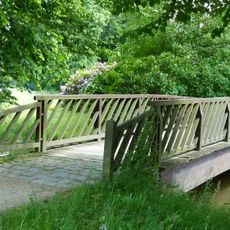
A complex of cast-iron bridges, including the Carp Bridge, crosses waterways where different streams meet. These structures were engineering showcases of their era and reveal how landscape design also meant skilled metalwork and construction.
The community of curious travelers
AroundUs brings together thousands of curated places, local tips, and hidden gems, enriched daily by 93,268 contributors worldwide.