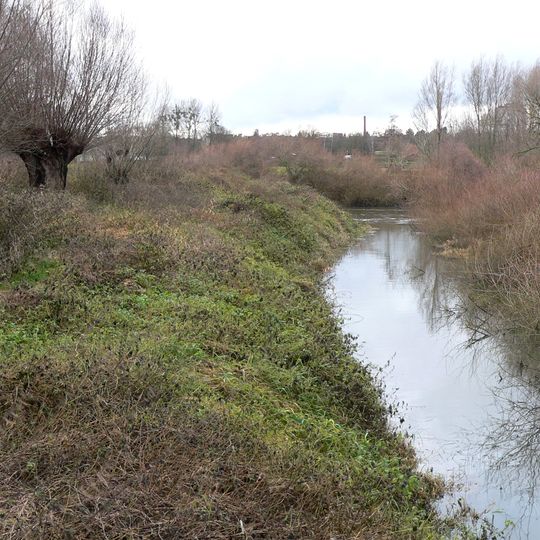
Ernst-August channel, Canal in Herrenhausen-Stöcken, Germany.
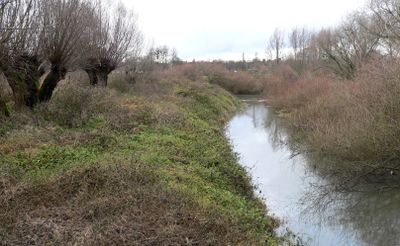
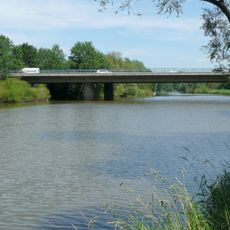
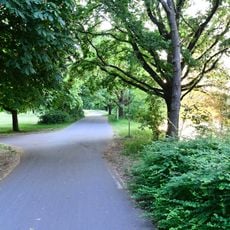
The Ernst-August-Kanal is a roughly 900-metre straight canal in Herrenhausen, dug from 1718 by soldiers of three battalions. It runs northwest from the Leine weir by the Wasserkunst to rejoin the Leine, is three to five metres wide, and widens to about 26 metres at the lock. Bushes have overgrown it and the low water level makes it impassable.
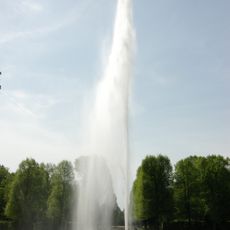
Dug from March 1718 over three years by soldiers of three battalions, the canal first served as the feeder and outflow of the Herrenhausen waterworks, which drove the Great Garden's fountain. It was named after Ernst August of Brunswick-Calenberg, who pushed the waterworks forward, while his son Georg Ludwig had the canal built. In 1717, before digging, workers found artefacts on the route, later read as the possible site of Limmer Castle.
The canal is named after Ernst August of Brunswick-Calenberg, who pushed the development of the water displays in the Great Garden; his son Georg Ludwig had the canal dug. Since the waterworks reopened in 2023, the canal again feeds the pumps and water wheels during demonstrations.
The canal is not navigable today: it is overgrown with bushes and its water level is low, so it is a walk-by sight rather than a boat route. The lock, about 40 m long from gate to gate, 6.5 m wide and 4 m deep, stands at the canal's start; its weathered oak gates and hand winches are visible from the bank.
In 1717, before digging began, workers found masonry and a blackened plaster floor on the canal route; the mayor of Hanover, Christian Ulrich Grupen, recorded the find in 1740, and the mound is now linked to Limmer Castle, seat of the counts of Roden.
The community of curious travelers
AroundUs brings together thousands of curated places, local tips, and hidden gems, enriched daily by 95,236 contributors worldwide.