Pforta abbey, Medieval monastery in Naumburg, Germany
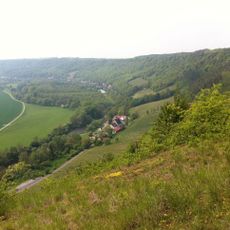
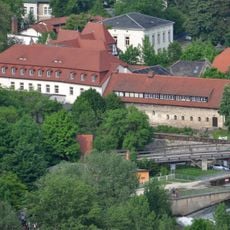
Pforta Abbey is a monastery complex near Naumburg in Saxony-Anhalt, set along the banks of the Kleine Saale stream. It consists of a Gothic church, a Romanesque cloister, several residential and working buildings arranged around inner courtyards, and a historic cemetery with stone grave markers.
The abbey was founded in 1137 by Cistercian monks from Walkenried and quickly grew into one of the most powerful religious centers in Central Germany. The monastic life came to an end in 1540 during the Reformation, after which the site was repurposed but the buildings were largely kept intact.
The Latin name Porta, meaning gate, was read as Porta Coeli, Gate of Heaven, and the abbey's west façade was designed to express this: it recalls a Roman triumphal arch and carries sculptural ornament that broke Cistercian rules. The towerless façade has been called the most brilliant example of its kind in Germany. The monastery is a station on the Romanesque Road and has been nominated by Germany for UNESCO World Heritage listing.
The complex is easy to explore on foot, and most of the main buildings including the church and the cloister can be visited. Dry weather makes a real difference here, as several outdoor areas like the courtyard and the cemetery are best seen without rain.
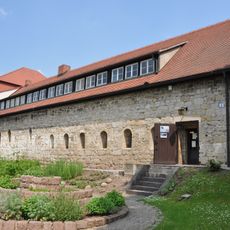
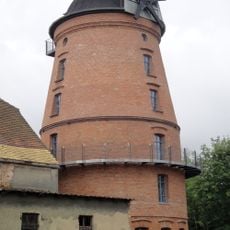
The mill between the western monastery wall and the cloister is a monumental stone structure with Romanesque elements, counted among the oldest surviving functional buildings in Central Germany. A Romanesque chimney marks the site of a former blacksmith's workshop. The Kleine Saale canal, about 10 km long and dug after 1180, still runs from Bad Kösen past Pforta toward Naumburg.
The community of curious travelers
AroundUs brings together thousands of curated places, local tips, and hidden gems, enriched daily by 93,140 contributors worldwide.