Friedhof Heerstraße, Garden monument and cemetery in Charlottenburg, Germany
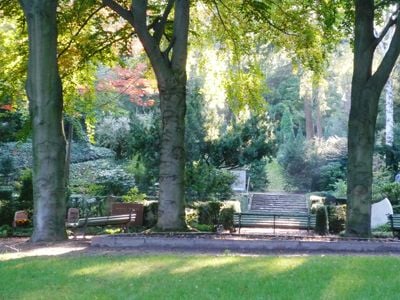
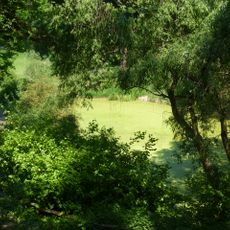
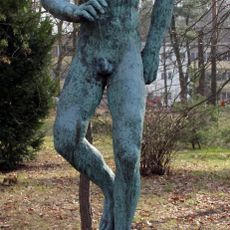
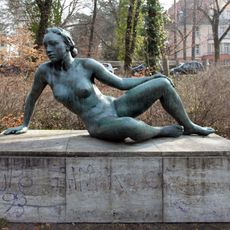
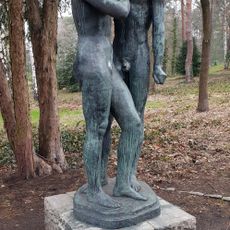
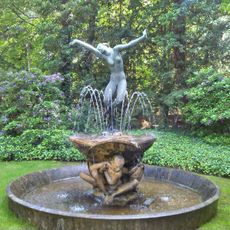
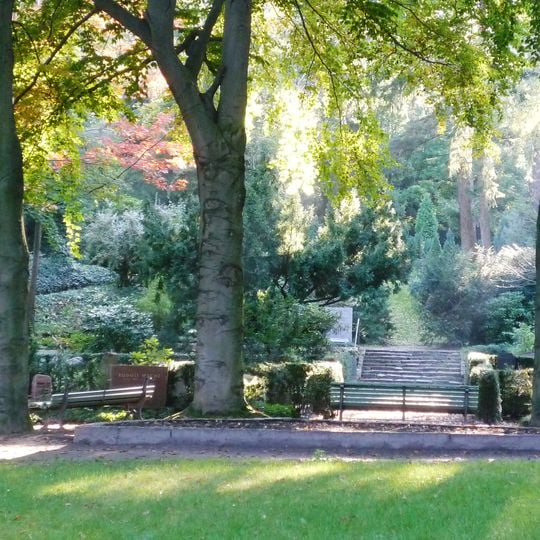
Friedhof Heerstraße is a cemetery and garden monument in Charlottenburg with spacious, tree-covered grounds. The expansive site contains a lake surrounded by greenery and is crisscrossed by well-maintained pathways that connect different burial sections.
Laid out from 1921 around the Sausuhlensee and opened on 7 October 1924, the cemetery was designed by Charlottenburg garden director Erwin Barth as a park and forest cemetery, with buildings by Erich Blunck. In 1935/36 the planned eastern extension was dropped and the land taken for landscaping around the 1936 Olympic site; the chapel's tall roof was lowered because it could be seen from the sports grounds. The extension was realised in May 1945 for war dead, and the war-damaged chapel was rebuilt in 1948 in its 1936 form.
The cemetery was interdenominational from the start, open to Christians, Jews, Muslims and even suicides, without separate faith sections. Its name comes from the Heerstraße villa colony whose residents it was built to serve. Among the graves are 51 Ehrengräber of the State of Berlin, more than at the Waldfriedhof Dahlem or Zehlendorf.
The grounds are accessible through several entrances and feature a network of pathways suitable for peaceful strolls. The sections are clearly organized and easy to navigate, despite the site's large scale.
During the 1930s, sections of the cemetery were deliberately screened from nearby sports facilities to shield certain burial areas from view. This deliberate intervention shows how local history and political circumstances shaped even the physical design of burial grounds.
The community of curious travelers
AroundUs brings together thousands of curated places, local tips, and hidden gems, enriched daily by 94,262 contributors worldwide.