Büraberg, Summit and mountain in Schwalm-Eder-Kreis, Germany.
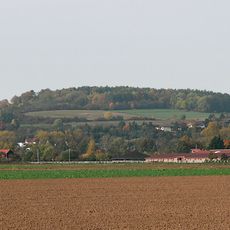
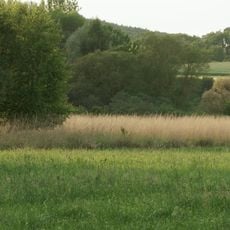
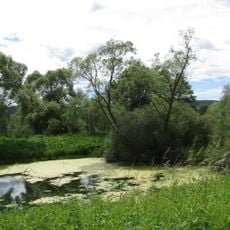
Büraberg is a summit in Schwalm-Eder-Kreis that rises about 275 meters (900 feet) above sea level. The surrounding landscape features open meadows, mixed forests, and rolling hills that characterize the terrain of northern Hesse.
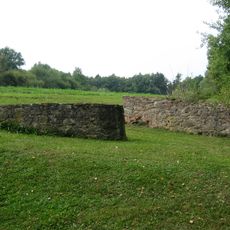
The plateau was settled repeatedly since the Stone Age, including the Michelsberg culture and the La Tène period. Around 680 a Frankish border fortress, the Büraburg, was built on older fortifications, with an interior of about 8 hectares, a mortar wall at least 1.50 m thick, several towers and three gates; around 750 the walls were widened to about 2.70 m. Boniface used it as a mission base and founded the first Hessian bishopric there in 742; it was absorbed into Mainz in 755. In 774 Saxons besieged the Büraburg without taking it, and by the 13th century the hill was uninhabited.
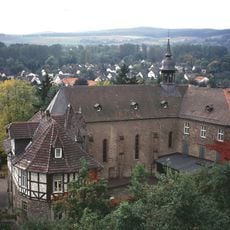
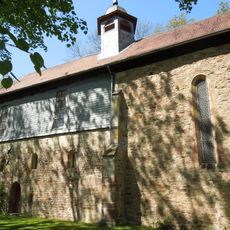
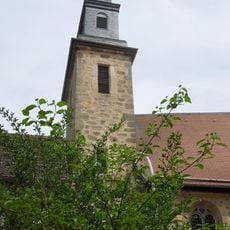
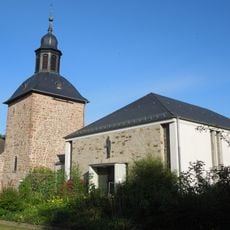
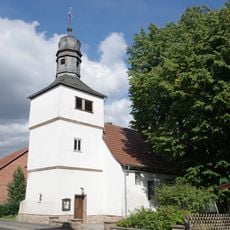
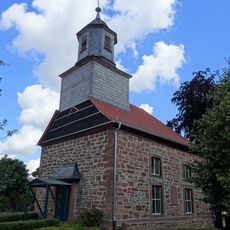
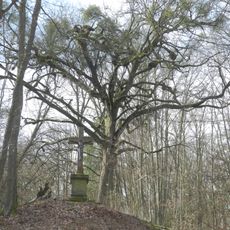
The chapel on the summit is dedicated to St Brigida, an Irish national saint. Since 1773 Catholics from Fritzlar and Ungedanken have walked here in an annual procession on the fifth Sunday after Easter, the Bittsonntag. A cemetery lies beside the chapel.
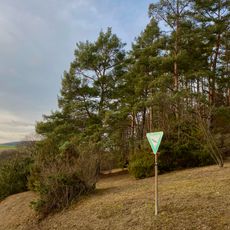
Visitors can reach Büraberg via marked hiking trails beginning from nearby parking areas with distance signs along the routes. The paths are well-marked and accessible to hikers of varying experience levels.
The chapel's chancel arch wall was radiocarbon-dated from charcoal in its lime mortar to between 543 and 668, which would make St. Brigida the oldest church building north of the Obergermanisch-Raetischer Limes. Some researchers question whether the sampled wood was reused.
The community of curious travelers
AroundUs brings together thousands of curated places, local tips, and hidden gems, enriched daily by 94,461 contributors worldwide.