Landschaftsgarten, Rock labyrinth and geological formation in Wunsiedel, Germany
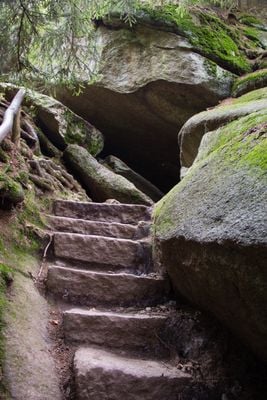
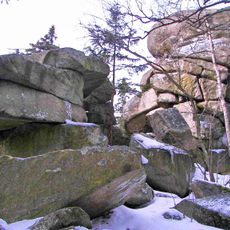
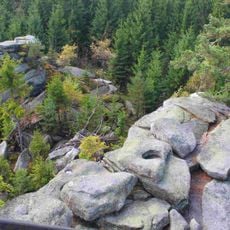
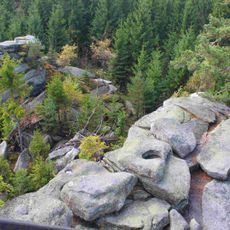
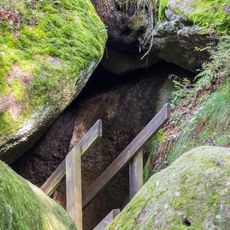
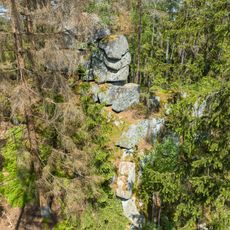
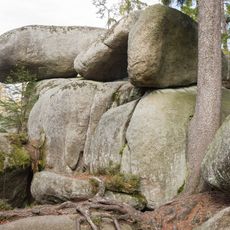
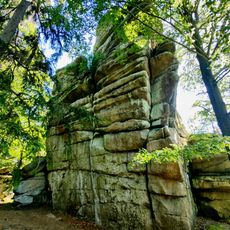
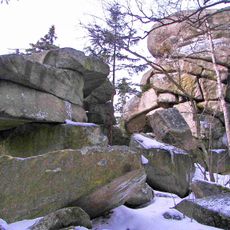
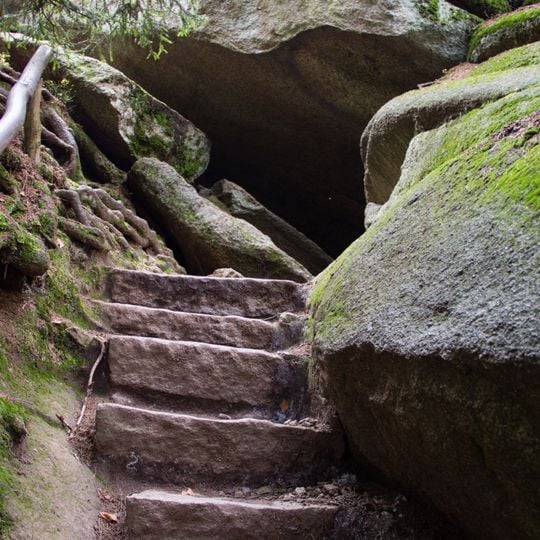
The Luisenburg Rock Labyrinth is a felsenmeer of granite blocks several metres across, set south of Wunsiedel. Its rounded blocks, shaped by spheroidal weathering in the tropical climate of the Tertiary, were later exposed by erosion and shifted, creating narrow clefts and steep stone steps. A flight of rough, uneven steps rises between moss-covered boulders and exposed tree roots toward a dark opening beneath a broad rock overhang.
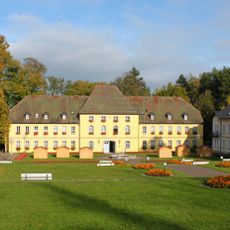
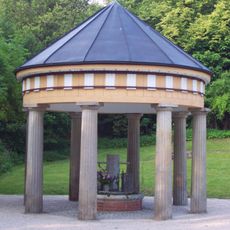
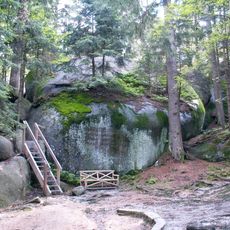
Around 1790, citizens of Wunsiedel began turning the granite blockfield into a landscape garden, influenced by the 1784 Society for the Portrayal of the History, Customs and Rights of the Fatherland. The first phase lasted until about 1800 and produced the name Luxburg, recalling the nearby Lugsburg motte; in 1805 it was renamed Luisenburg after Queen Louise visited with Frederick William III. A second phase followed between 1811 and 1815.
The blockfield is named after Queen Luise, who visited it in 1805 with her husband Frederick William III and wrote enthusiastically to her son about the experience. Since 1794 the terrain has served as a stage; today the Luisenburg Festival performs annually in the natural amphitheatre framed by the rocks.
The paths between the stones are tight in places and require sturdy footwear for safe footing. Plan to move slowly, as surfaces are uneven and can be slippery, especially when wet.
The rounded shapes of the blocks come from spheroidal weathering in the warm, humid climate of the Tertiary; erosion later freed them from the surrounding ground, so they became unstable and shifted. Goethe visited in 1820 and rejected earthquakes and floods as the cause, writing that nature had acted quietly and slowly.
The community of curious travelers
AroundUs brings together thousands of curated places, local tips, and hidden gems, enriched daily by 92,783 contributors worldwide.