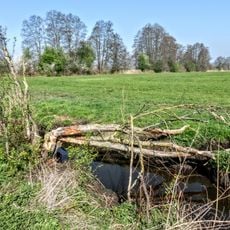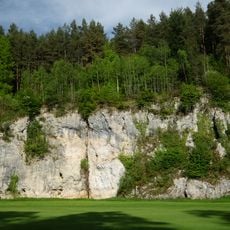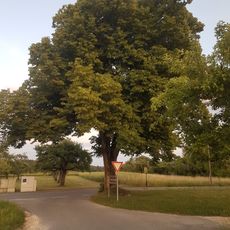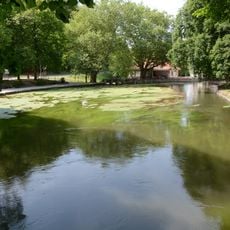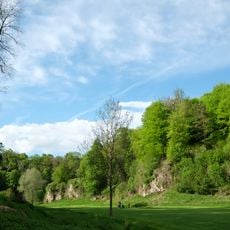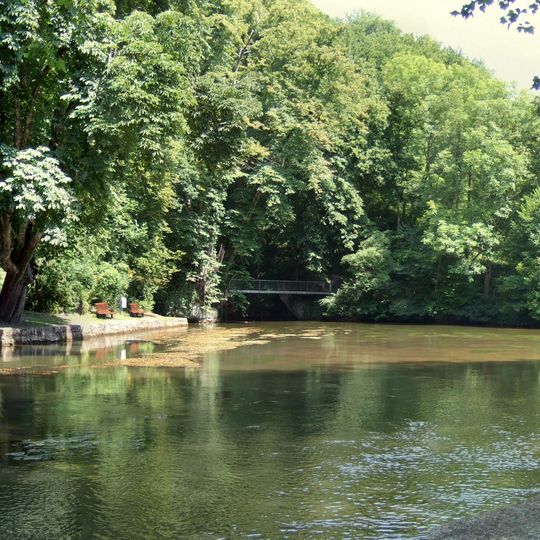
Aachtopf, Karst spring in Aach, Germany
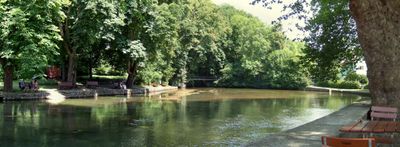
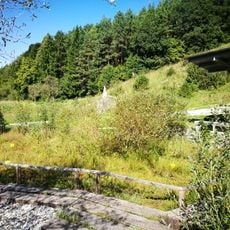
The Aachtopf is a karst spring in Aach that discharges about 8,500 liters of water per second, forming Germany's largest karst spring system. Water collects in a natural basin that is fed by underground limestone passages.
Scientific investigation of the spring began in 1719, but it took until 1877 when geologist Adolf Knop conducted decisive experiments to trace the water's origin. His work revealed where the water actually came from.
The name comes from Old High German words: 'Aach' means water and 'Topf' means bowl or basin. This reflects how local people have traditionally understood and named this place.
The spring is accessible throughout the year, with water flow varying based on the season. It helps to check conditions before visiting, as heavy rainfall can significantly affect water volume.
Water from the Danube River travels underground for about 12 kilometers through limestone caves before emerging here. This long hidden journey makes the spring a remarkable example of how groundwater moves through rock.
The community of curious travelers
AroundUs brings together thousands of curated places, local tips, and hidden gems, enriched daily by 92,641 contributors worldwide.