Hohenkrähen, Volcanic mountain in Hegau, Germany.
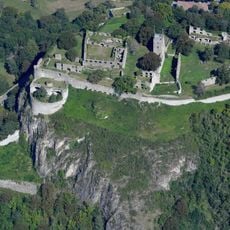
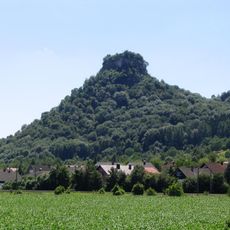
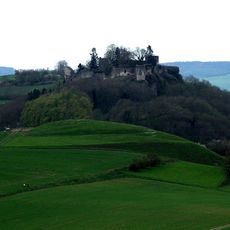
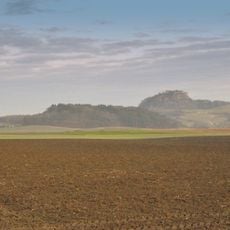
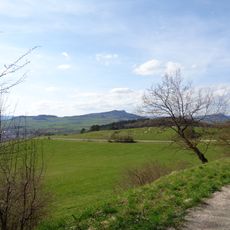
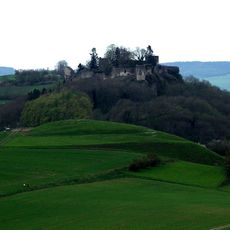
Hohenkrähen is a phonolite cone rising about 200 metres above the villages of Duchtlingen, Schlatt unter Krähen and Mühlhausen in the Hegau. Its summit reaches 636.6 m above sea level and carries the ruins of Hohenkrähen Castle. The upper slopes show bare grey rock just below the top, while the lower slopes are wooded, with linden trees and rare plants such as grey cinquefoil and Bleicher Schöterich.
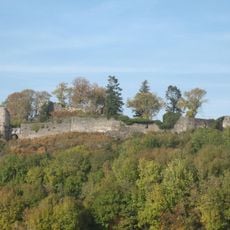
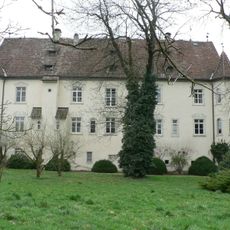
Hohenkrähen Castle was built between 1180 and 1190 by the lords of Friedingen, who from 1191 were also called "de Craien". In the Thirty Years' War Konrad Widerholt, fortress commander of Hohentwiel, burned it down; since then it has been a ruin. From 1956 the Pfadfinderschaft Grauer Reiter leased it from Graf Douglas Freiherr von Reischach and uses it as a youth castle.
The name Hohenkrähen means "High Crows"; the castle lords were recorded as "de Craien" from 1191. Since 1956 the scout group Pfadfinderschaft Grauer Reiter has leased the ruin from Graf Douglas Freiherr von Reischach and runs it as a "Jugendburg" for youth work.
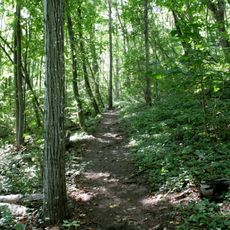
Hiking trails lead to the summit through rock formations where you can spot rare plants like gray cinquefoil and yellow sage along the way. The climb is manageable for hikers with average fitness, and routes offer varying difficulty levels.
The castle ruin on the summit has been leased since 1956 by the Pfadfinderschaft Grauer Reiter, a scout group, from Graf Douglas Freiherr von Reischach and used as a youth castle. In 1983/84, thirteen Roman coins from the first half of the 2nd to the mid-4th century were found in the slope debris.
The community of curious travelers
AroundUs brings together thousands of curated places, local tips, and hidden gems, enriched daily by 93,871 contributors worldwide.