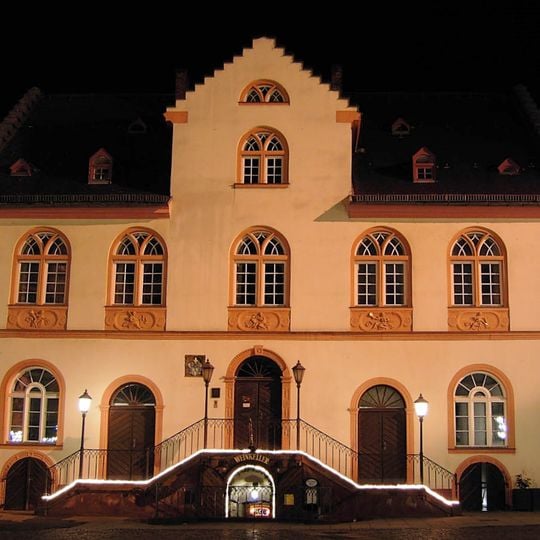
Altes Rathaus, Renaissance town hall in Mitte district, Wiesbaden, Germany
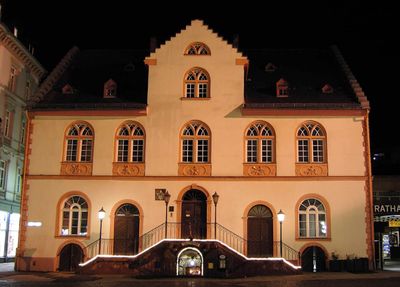
The Altes Rathaus is a Renaissance town hall in the city center featuring elaborately worked stone facades with symmetrically arranged windows across multiple stories. The carefully carved details on the exterior demonstrate the craftsmanship of the period.
Built from 1608 to 1610 to plans by Valerius Bausendorff under master builder Antonius Schöffer, it is the oldest building in Wiesbaden. Citizens worked seven weeks without pay on its construction. In 1725 minor alterations followed; in 1828 the timber-framed upper storey was replaced by Gothic-style stone masonry. A thorough renovation in 2002 added a glass lift at the rear.
The eleven oak relief panels under the first-floor windows showed Strength, Justice, Charity, Prudence and Moderation; since 1928 the originals have been in the Wiesbaden Museum, with stone copies on the facade. The building now serves as the city's registry office, and a wine tavern occupies the vaulted cellar reached by a stair beneath the double flight of steps.
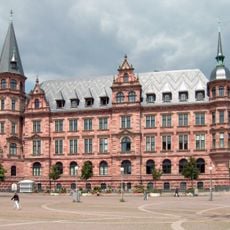
The building stands on Marktstraße, facing the Stadtschloss and the Neues Rathaus. A glass lift added during the 2002 renovation is on the rear side, and the vaulted cellar beneath the double flight of stairs houses a wine tavern reached by a staircase set centrally under the steps. The Marktbrunnen of 1753 stands in front of the stairs.
The two-flight outdoor staircase originally had no railing, and residents of Wiesbaden worked on the building for seven weeks without pay. To the right of the entrance stood the pillory, where offenders were chained during market days and exposed to mockery.
The community of curious travelers
AroundUs brings together thousands of curated places, local tips, and hidden gems, enriched daily by 94,024 contributors worldwide.