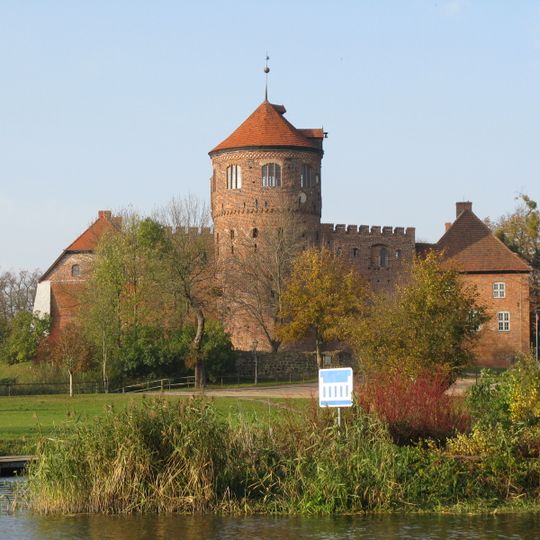
Alte Burg Neustadt-Glewe, Medieval counter-castle in Neustadt-Glewe, Germany.
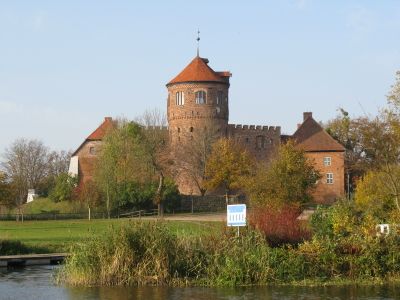
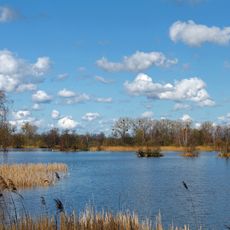
Alte Burg Neustadt-Glewe is a lowland castle on a natural dune by a side arm of the Elde, laid out as a Randhausburg around a rectangular courtyard of about 50 by 35 metres. The surviving parts are the Old House, the New House, the ring wall with wall-walks, and the 28-metre bergfried begun in the early 15th century. The gatehouse, drawbridge, castle chapel, stables and smithy are gone; only a pond on the southwest side remains of the moat.
The first parts of the Alte Burg were built in the mid-13th century on the orders of the Count of Schwerin on a natural dune of the Elde. Its purpose was to secure the southern and south-eastern border of the County of Schwerin, which was marked by disputes with the County of Dannenberg and the bishoprics of Havelberg and Ratzeburg. The castle was first mentioned in a document in 1331. From 1358 it served as a bailiwick and later as a secondary residence of the Mecklenburg dukes until the 18th century.
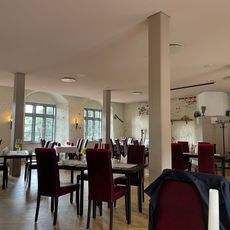
The castle's name lives on in the annual Burgfest, held on a weekend in June with a medieval market, knightly tournament and mock combats, plus the appearance of the "Burgadels". Easter and the December Märchenburg also follow historical themes. The New House now holds a café and function room, with the castle museum upstairs.
The museum in the Neues Haus covers the castle's history, and the Bergfried can be climbed; its dungeon is reached only through a floor hatch in the former guardroom. The 28-metre tower's upper floors were originally accessible only via the wall-walks, and a staircase was added later. The site lies near the town centre on a side arm of the Elde, with a small pond remaining from the former moat.
The castle's oldest structure is the 28-metre bergfried, built in the early 15th century on the foundation walls of an earlier square building. Its upper storey, added in the 16th or 17th century, has seven large arched windows and served as a heated living room with a fireplace and stone benches, now called the Rittersaal.
The community of curious travelers
AroundUs brings together thousands of curated places, local tips, and hidden gems, enriched daily by 94,514 contributors worldwide.