Volkstedt porcelain, Porcelain manufacture in Rudolstadt, Germany.
Volkstedt porcelain is a porcelain manufactory in Rudolstadt, Thuringia, where traditional pieces are made using hand-craft techniques passed down over generations. The production areas are open to visitors, showing the full journey of porcelain from raw clay to finished, painted objects.
Georg Heinrich Macheleid obtained the privilege to found a porcelain manufactory on 8 September 1760, initially intended for Sitzendorf. In 1762 Prince Johann Friedrich of Schwarzburg-Rudolstadt granted the privilege and the works were moved to Volkstedt, near his court in Rudolstadt. Christian Nonne leased the manufactory in 1767 and led it to artistic and commercial success; in 1797 Landgrave Ernst Konstantin of Hesse-Philippsthal bought it and resold it two years later.
The manufactory's reputation rests on finely painted, carefully modelled porcelain figures, a speciality it has held since the 18th century. Its underglaze blue marks include the crowned N borrowed from Capodimonte, a closed crown with R for Rudolstadt, and crossed swords taken from Meissen. Figures such as "Flucht der Gräfin Cosel", Frederick the Great, the dancer Fanny Elssler and the Flötenkonzert von Sanssouci are still produced by hand.
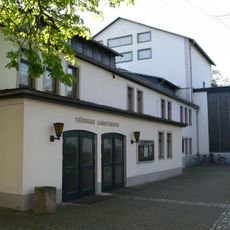
The factory building from the 18th century was rebuilt in 2006/07 as a glass manufactory, so visitors can watch every step done by hand, from moulding to painting. A works museum in the same complex displays sample patterns, models and moulds. The site lies in Volkstedt, part of Rudolstadt in Thuringia.
In 1923/24 the manufactory executed designs by Bauhaus ceramicists Theodor Bogler and Otto Lindig. Its underglaze-blue marks include a crowned N borrowed from Capodimonte, a closed crown with R for Rudolstadt, and crossed swords taken from Meissen.
The community of curious travelers
AroundUs brings together thousands of curated places, local tips, and hidden gems, enriched daily by 94,037 contributors worldwide.