Werl Pilgrimage Churches, Baroque pilgrimage church in Werl, Germany
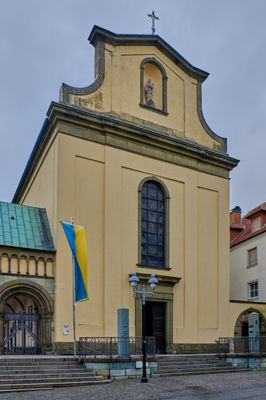
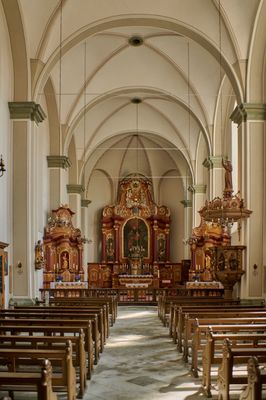
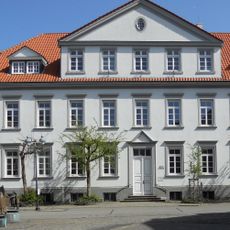
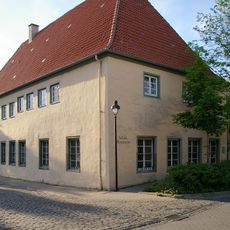
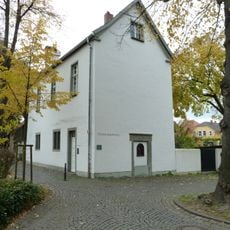
The Werl Pilgrimage Churches form a connected ensemble of two main buildings distinguished by intricate stonework and symmetrical facades. The structures display classic German baroque characteristics with decorative elements adorning doorways, windows, and rooflines throughout.
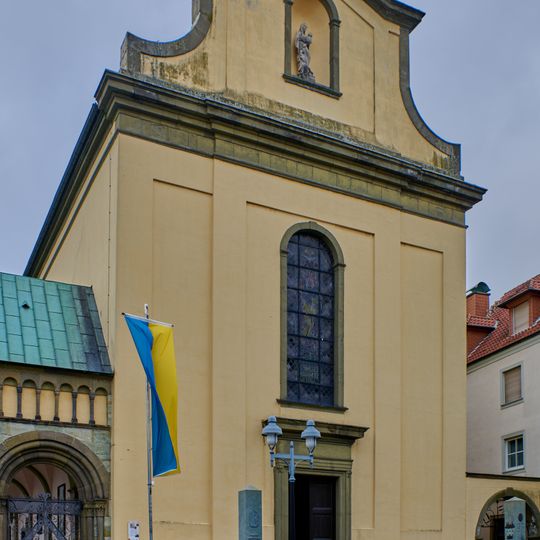
The pilgrimage to Werl's 12th-century wooden Madonna began in 1661, prompting a Capuchin church completed in 1662 that soon became unstable and was demolished. The Baroque replacement, designed by Franz Arnold Matthias Boner, was built from 1786 to 1789 as a five-bay hall church. It was extended eastward in 1859–1860 with a five-sided choir and a ridge turret.
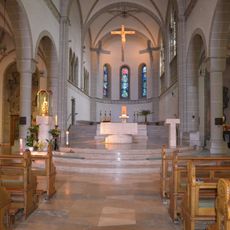
The pilgrimage began in 1661 around a 12th-century wooden figure of Mary with the child on her lap, the Gnadenbild. The old church, dedicated to the Visitation, served the Capuchin friars; the adjacent basilica replaced it for the growing crowds and was made a Basilica minor in 1953.
The church is open daily to visitors, with clear signage guiding people through its different areas. Regular masses take place throughout the week, and additional services occur on weekends and religious holidays.
The green sandstone from Rüthen was used for the newer pilgrimage basilica next door, not for the Old Pilgrimage Church. The older church is a plastered hall building; its curved west gable holds a niche with a Mary figure carved by Joseph Wäscher.
The community of curious travelers
AroundUs brings together thousands of curated places, local tips, and hidden gems, enriched daily by 94,498 contributors worldwide.