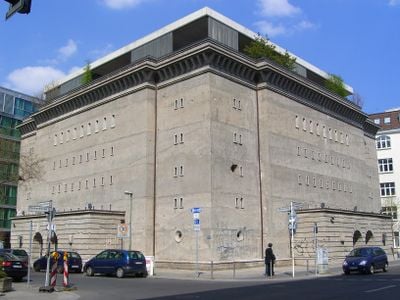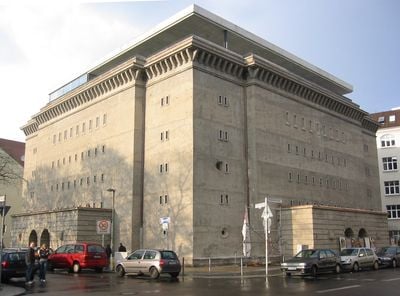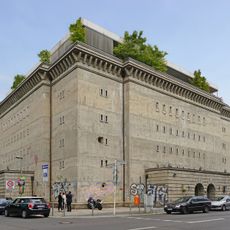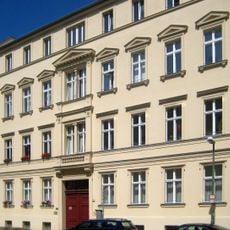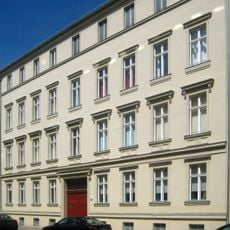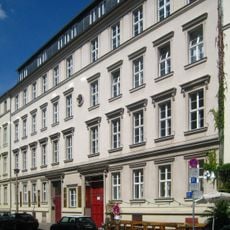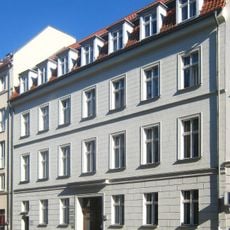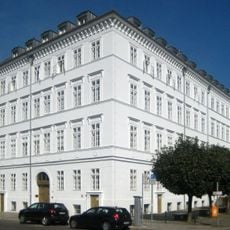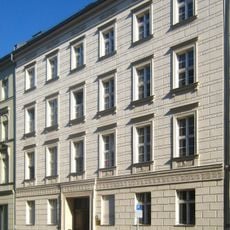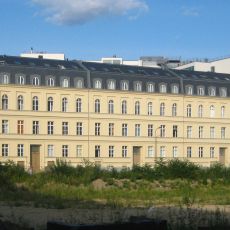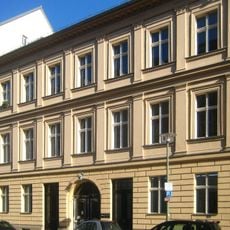
Reichsbahnbunker Friedrichstraße, Above-ground air-raid shelter in Berlin-Mitte, Germany
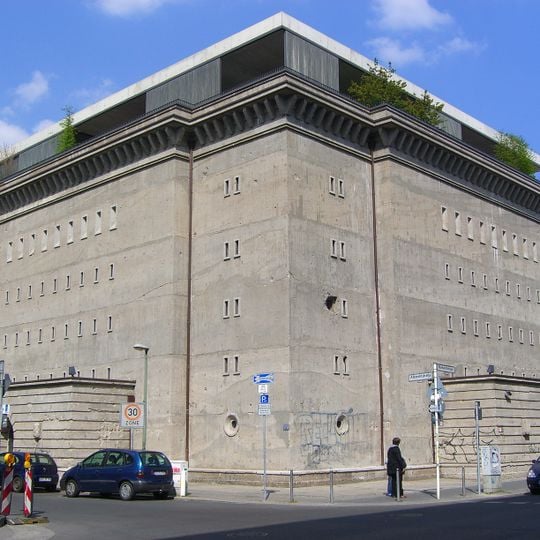
The Bunker is a five-story reinforced concrete structure in Berlin-Mitte, originally conceived as a wartime air raid shelter. Its massive exterior walls rise without ornament, interrupted only by sparse rectangular openings, while inside the floor plan divides into numerous small chambers with low ceilings.
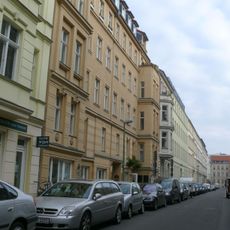
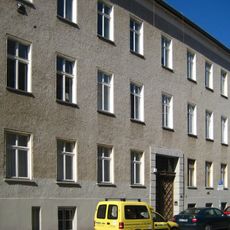
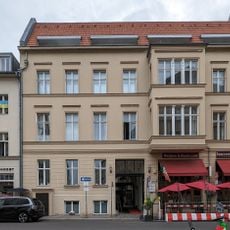
Karl Bonatz designed the reinforced-concrete shelter, built 1941–1943 by forced labourers for up to 3,000 Reichsbahn passengers and staff, with 3,088 seats and 48 beds. In May 1945 the Red Army occupied it, and the Soviet NKWD used it and the neighbouring house as an investigation prison until December 1949. From 1950 the East German Stasi took over both buildings; from 1951 the bunker served as a textile store and from 1957 as a depot for Cuban dried and tropical fruit, hence the nickname "Bananenbunker".
The building now functions as a private exhibition space for contemporary art, opening to guided groups at limited times throughout the year. Former shelter chambers display large-scale installations and works by international artists, positioned in conversation with the thick concrete walls and narrow window openings.
Access is only possible through pre-booked guided tours with limited group sizes, which must be reserved in advance. Interior spaces have no natural daylight and are reached by narrow staircases, which may be a consideration for those with limited mobility.
A glass penthouse was added on top of the flat roof, creating a sharp contrast with the gray concrete mass below. This addition was built after 2003 and serves as a private residence rarely included in tours.
The community of curious travelers
AroundUs brings together thousands of curated places, local tips, and hidden gems, enriched daily by 92,790 contributors worldwide.