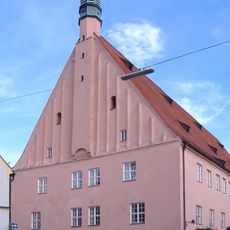
Deutsches Medizinhistorisches Museum, Medical museum and architectural heritage monument in Ingolstadt, Germany.
The Deutsches Medizinhistorisches Museum is a medical museum housed in a Baroque building and displays instruments, anatomical preparations, and documents that document medical developments across several centuries. The collection encompasses surgical procedures, therapeutic methods, and medical equipment from various periods.
The late-Baroque building was erected between 1723 and 1736 to plans by Gabriel de Gabrieli for the medical faculty of the former Bavarian state university, and served as a university institute until 1800. After the university moved to Landshut it was used as a farm, among other things. The museum, initiated by the physician and medical historian Heinz Goerke, has occupied the Alte Anatomie since 1973; the main building reopened in October 2020 after restoration.
The garden behind the museum recreates the former university botanical garden in a layout modelled on Baroque examples. Around 200 medicinal plants are grown there, arranged by their main active compounds. The rear section is designed as a garden for the blind and fitted with raised beds, so the plants can be reached and touched.
The museum is located on Anatomiestrasse and is accessible to visitors on most days, with barrier-free access to the exhibition areas. It is advisable to allow plenty of time to explore the collections, especially if you are interested in the details of medical history.
The former anatomy hall of the Alte Anatomie keeps its Baroque ceiling fresco. The museum also holds the skeleton of Thomas Hasler, the "Giant of Tegerensee", who stood 2.35 metres tall and weighed 155 kilograms.
The community of curious travelers
AroundUs brings together thousands of curated places, local tips, and hidden gems, enriched daily by 94,191 contributors worldwide.