Kempten Abbey, Benedictine monastery in Bavaria, Germany
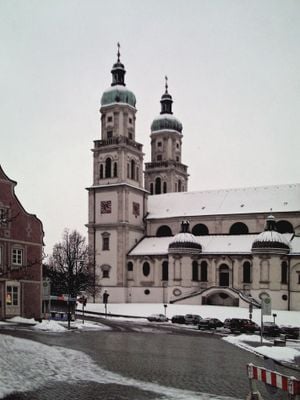
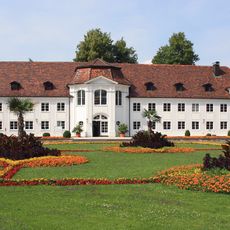
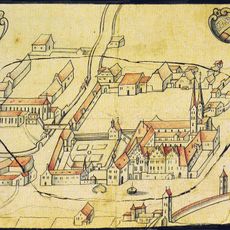
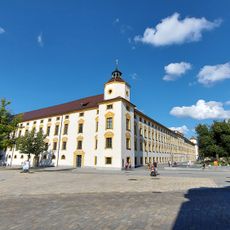
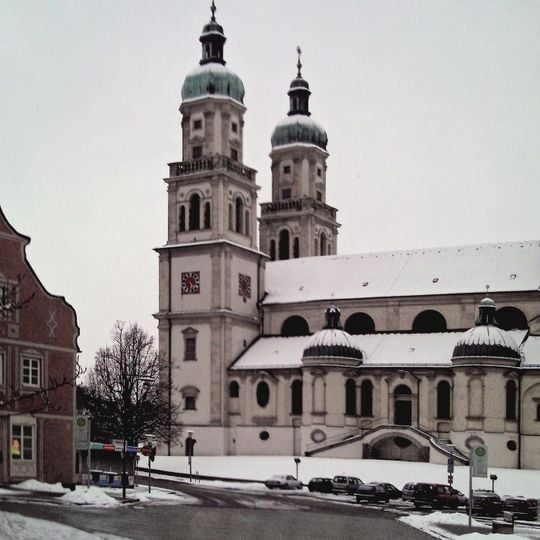
Kempten Abbey is a former Benedictine monastery in Bavaria with a grand baroque basilica topped by twin towers and an extensive complex of buildings connected by courtyards. The entire site now houses the District Administration Office of Swabia and displays the typical layout of a large monastic estate.
The abbey was founded in 752 and received early support from Hildegard, wife of Charlemagne, which highlighted its importance in the early medieval Church. It achieved the status of a Prince-Bishop's seat with voting rights in 1548, making it one of the most influential religious institutions in southern Germany.
The monastery functioned as a hub for religious education and the production of manuscripts that spread knowledge throughout medieval southern Germany. Its reputation as a center of learning drew monks from across the region and made it a vital place for preserving and transmitting ideas.
The complex is open to visitors and allows you to explore the baroque architecture and layout of a former monastery up close. It works best as a walking tour through the courtyards and around the outer facades to appreciate the full scale of the site.
The abbey was the site of the last recorded witchcraft trial in the Holy Roman Empire, which took place in 1775 and involved a woman named Anna Maria Schwegelin. This case marked the end of a dark chapter in European legal history.
The community of curious travelers
AroundUs brings together thousands of curated places, local tips, and hidden gems, enriched daily by 90,845 contributors worldwide.