Viktoriapark, Garden monument and park in Kreuzberg, Germany
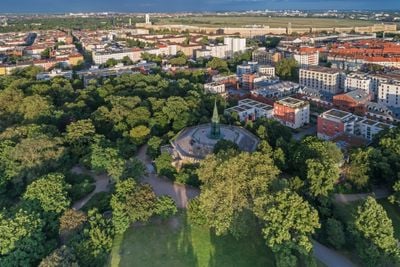
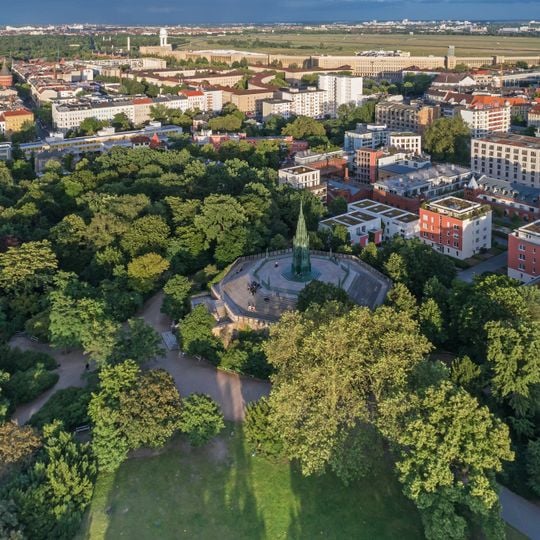
Viktoriapark is a garden monument and park in Kreuzberg, Berlin, built around a hill rising 66 meters above the surrounding streets. An artificial waterfall tumbles 24 meters down the northern slope toward Grossbeerenstrasse and forms the centerpiece of the grounds.
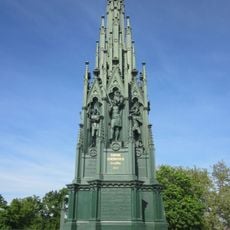
The hill's history began in 1821 with Karl Friedrich Schinkel's National Monument for the Liberation Wars, whose iron cross gave Kreuzberg its name. Berlin bought 8.5 hectares of land in 1887, and on 28 June 1888 the city parliament approved Hermann Mächtig's park design, which he revised with a naturalistic waterfall. The park opened in 1894; Albert Brodersen extended it westward from 1913 to 1916.
The name comes from a cast-iron tower topped with an iron cross that stands at the summit and later named the whole district. Locals use the green spaces for picnics and relaxation, while dogs play on the lawns and walkers admire the grapevines planted on the southern slope.
Paved paths lead to several viewpoints offering views over the rooftops toward central Berlin. Visit on weekday mornings when fewer people are around and the sound of the water feels calmer.
Mächtig and sculptor Albert Manthe toured the Giant Mountains for inspiration, but the waterfall itself was built from local boulders and pieces of rock; no documented model exists. Between 1898 and World War I it was lit at night in light resembling Bengal fire, and in 1955 firefighters refilled it for a single day using their pumps.
The community of curious travelers
AroundUs brings together thousands of curated places, local tips, and hidden gems, enriched daily by 92,802 contributors worldwide.