Finow Canal, Inland waterway in Brandenburg, Germany
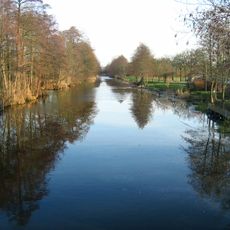
The Finow Canal is a 56 km waterway running from Liebenwalde on the Havel to Hohensaaten on the Oder, between Zerpenschleuse and Liepe parallel to the Havel-Oder Waterway. In the photograph it runs straight toward a tree-lined horizon, with a low red-brown brick retaining wall and a trimmed hedge on the left bank and leafless trees and tall reeds on the right. Its historic head section, the Langer Trödel, was reconnected in 2016.
The waterway was created in the early 1600s to enable trade and transport between distant regions under local rulers. Later centuries brought technical upgrades to handle increasing traffic and modernize the infrastructure.
The canal's name comes from the Finow river, whose course it follows between Liebenwalde and Liepe. In the 19th century the Finow valley was called the "Märkische Wuppertal" because the waterway drew metal-processing industry to its banks. Since 2016 the historic Langer Trödel section has been reconnected, and the canal is used mainly by pleasure boats.
The canal runs about 56 km from Liebenwalde on the Havel to Hohensaaten on the Oder, with the historic Langer Trödel section reconnected since 2016. Between Zerpenschleuse and Liepe it runs parallel to the Havel-Oder Waterway, and from Liepe it is absorbed into it. The waterway is managed by the Eberswalde waterways authority; today it carries mainly boat traffic.
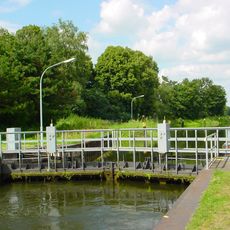
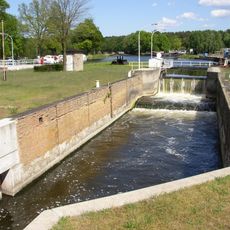
In 1898 and 1899, Siemens & Halske tested electric boat towing on the canal between Eberswalde's town lock and Ragöse lock, trying the Köttgen and Lamb systems. Lamb used a motor running on a fixed wire rope, Köttgen an electric towing locomotive. Lessons from these trials fed into the Teltow Canal's towing railway and the Niederfinow lock staircase.
The community of curious travelers
AroundUs brings together thousands of curated places, local tips, and hidden gems, enriched daily by 92,895 contributors worldwide.