Gollenstein, Prehistoric menhir in Blieskastel, Germany
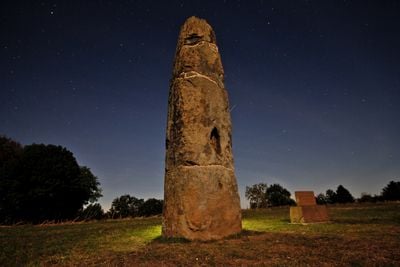
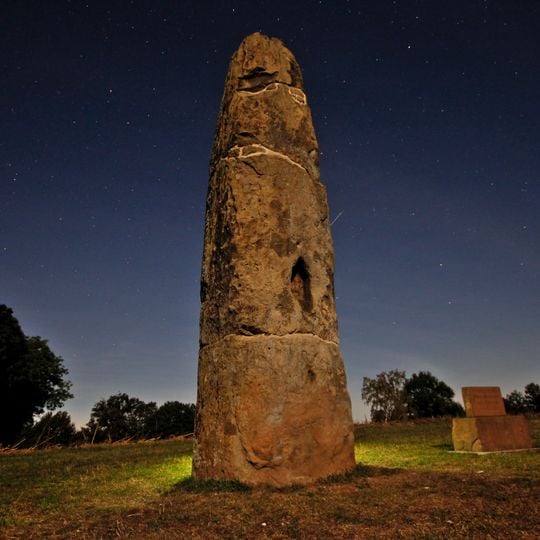
The Gollenstein is a prehistoric menhir in Blieskastel that rises about 6.5 meters from the ground, making it the tallest standing stone monument in Central Europe. The sandstone block bears a carved niche with a human figure and was originally placed upright in the earth.
The sandstone block dates to around 2000 BCE and marks the end of the Neolithic period in the Saarland region. After German military forces dismantled it in 1939, the monument was rebuilt with concrete in 1951.
The carved niche on the stone holds a human figure relief, showing how ancient peoples linked this place to spiritual beliefs and the honoring of those who came before. This makes clear why the location held deep importance for prehistoric communities.
The menhir stands on the Blieskasteler Berg north-west of Blieskastel's centre, on open ground reached on foot from the town. The stone was re-erected in 1951 with concrete joints, so the seams between its four large pieces are visible up close. The carved niche and the relief figure below it face the front and are best seen in low, angled light.
The niche with the cross was probably cut only in 1809, giving the pagan stone a Christian use. Below it, relief fragments of two legs with feet, parts of a torso, a head and an arm with hand are carved; they are thought to show a prehistoric deity resembling the Celtic weather god Taranis.
The community of curious travelers
AroundUs brings together thousands of curated places, local tips, and hidden gems, enriched daily by 92,842 contributors worldwide.