St. Ottilien Archabbey, Benedictine monastery in Eresing, Germany.
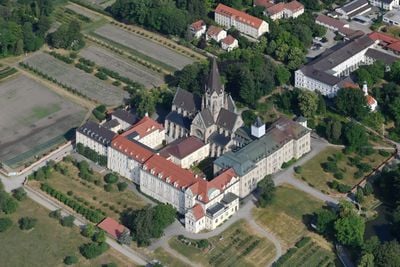
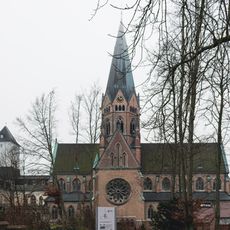
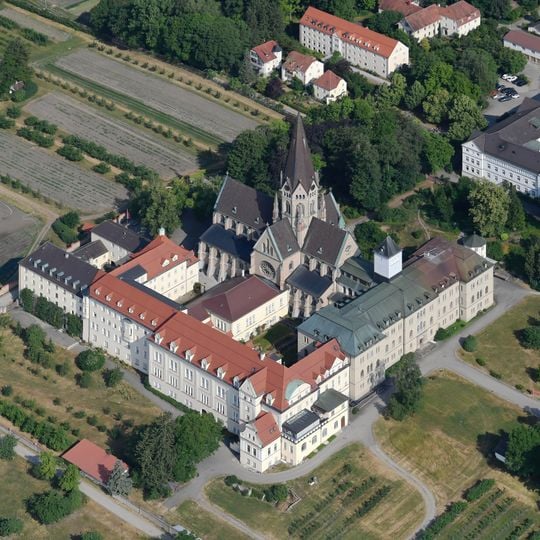
St. Ottilien Archabbey is a Benedictine monastery in Eresing, Bavaria. Its Neo-Gothic abbey church, built from 1897 to 1899 to plans by Hans Schurr, has a 75-metre octagonal spire visible from afar. Pale stone wings with red tiled roofs enclose a courtyard behind the church, and a long green-roofed building extends from a small square tower with a grey pyramidal roof.
Andreas Amrhein, a Benedictine from Beuron, moved his community from Reichenbach to Emming in 1887 and named the monastery after the existing chapel of Saint Ottilia. It became an abbey in 1902 and was raised to archabbey in 1914, heading the Ottilien Congregation. The Gestapo expelled the monks in 1941; they returned in 1945.
The monastery displays its mission work in an Art Nouveau sacristy museum with artifacts from South Africa, Korea, and China. Visitors can explore the global connections this community maintained through their religious outreach.
The monastery welcomes visitors with a publishing house, retreat spaces, guest rooms, and a museum exploring its mission history. Plan time to walk the grounds and experience the rhythm of monastic life in this rural setting.
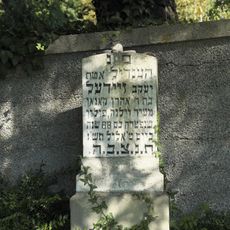
From April 1945 to May 1948 the abbey housed a Displaced Persons camp for some 5,000 concentration camp survivors, run by the Lithuanian doctor Zalman Grinberg. In those years 428 children were born there, and a Jewish cemetery beside the monastery cemetery holds 76 graves. Twelve stations across the grounds recount this history, including the liberation concert of 27 May 1945.
The community of curious travelers
AroundUs brings together thousands of curated places, local tips, and hidden gems, enriched daily by 93,514 contributors worldwide.