Volkspark Friedrichshain, Public park in Friedrichshain, Germany.
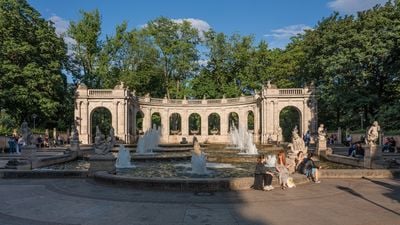
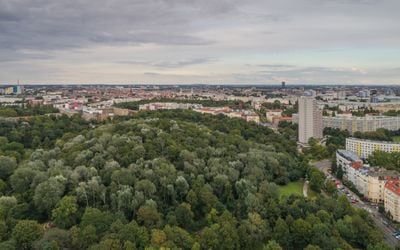
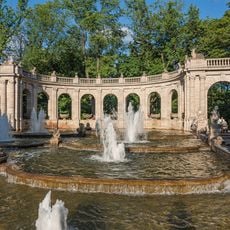
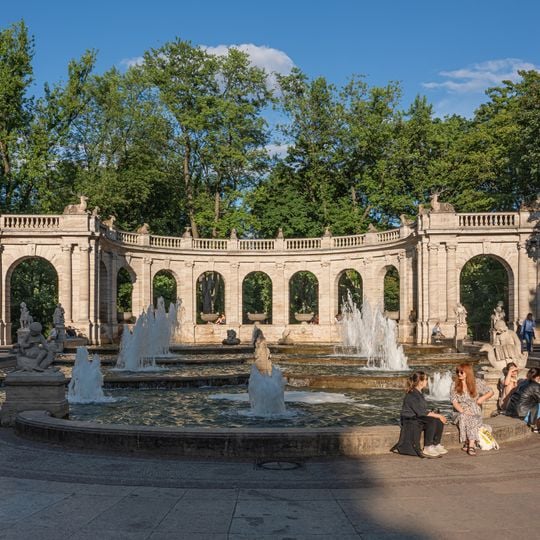
Volkspark Friedrichshain is a 52-hectare park on the border of Friedrichshain and Prenzlauer Berg. Its Märchenbrunnen, completed in 1913 after twelve years of work, has a curved light beige stone colonnade with seven round arches, statues on the end piers, and tiered dark basins with geyser-like jets; sculpted figures sit at the corners of the lowest basin. Two artificial hills, the 78-metre Großer and 48-metre Kleiner Bunkerberg, rise from rubble.
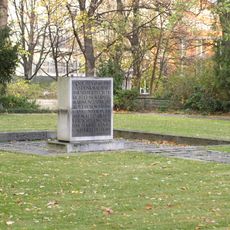
The park opened in 1848 and is considered Berlin's first public green space, with a cemetery for civilians from the March Revolution that same year. After World War II, the two hills were created from rubble of destroyed buildings.
The Märchenbrunnen displays over a hundred stone sculptures of characters from German fairy tales and shapes how the park looks today. The fountain with its painted statues is a popular meeting spot where visitors recognize familiar figures from the stories collected by the Brothers Grimm.
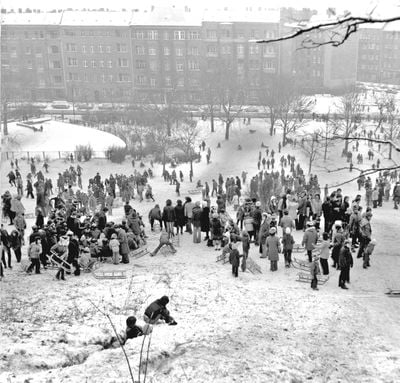
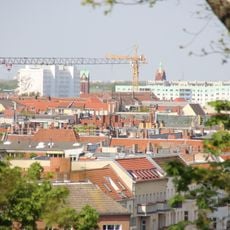
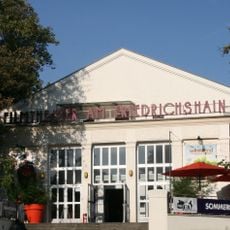
The park lies between Landsberger Allee to the south and the Bötzowviertel in Prenzlauer Berg to the north. Both rubble hills, the 78-metre Großer and the 68-metre Kleiner Bunkerberg, have viewing platforms, and a sledding run was laid out on the eastern slope of the smaller one. In summer the open-air stage in the southern part is used by Radio Eins's open-air cinema.
The two rubble hills are not equal: the Großer Bunkerberg (Mont Klamott) reaches 78 metres, the Kleiner Bunkerberg 48 metres, and each has an observation platform. On the eastern slope of the smaller hill a popular sledding run was laid out once the rubble tipping was finished. The hills were raised over more than two million cubic metres of debris from bombed-out buildings.
The community of curious travelers
AroundUs brings together thousands of curated places, local tips, and hidden gems, enriched daily by 93,737 contributors worldwide.