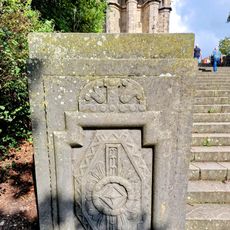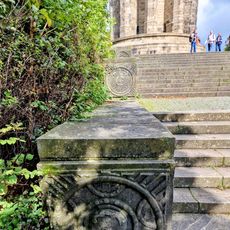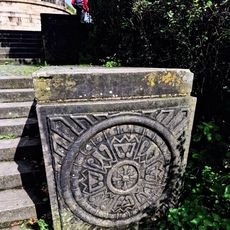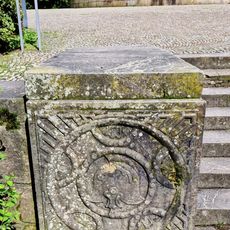
Hermannsdenkmal, Germanic monument in Teutoburg Forest, Germany
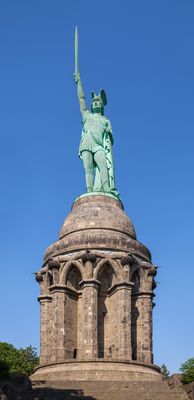
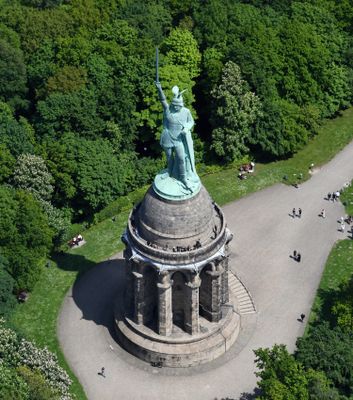
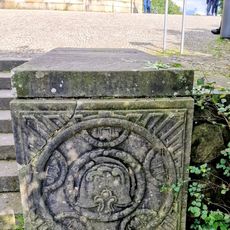
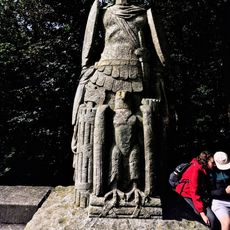
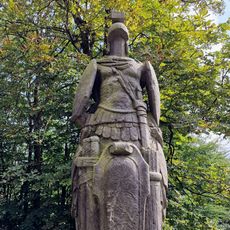
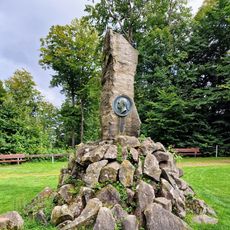
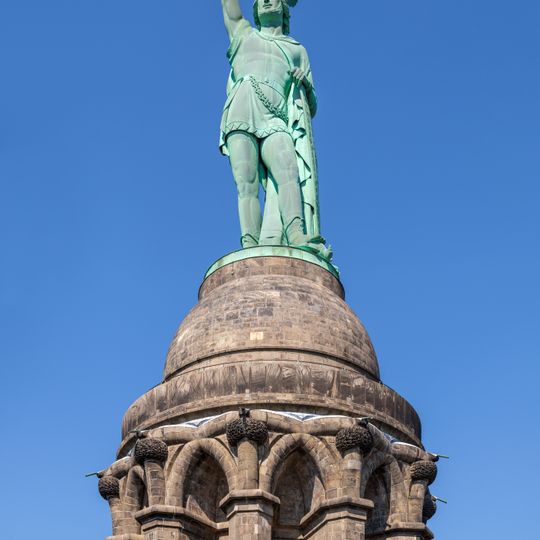
The Hermannsdenkmal is a 53.46-metre monument on the Grotenburg near Detmold: a copper-skinned figure of Arminius with raised sword stands on a domed sandstone drum ringed by ten pillars and ten recessed niches, with pointed arches and pinecone-shaped ornaments. The statue is 26.57 m tall on a 26.89 m base.
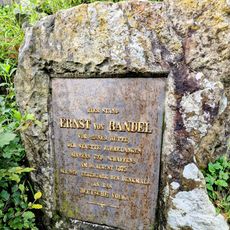
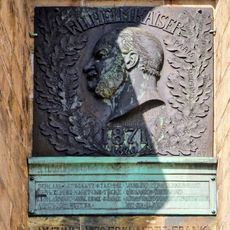
Ernst von Bandel began the monument in 1838; work stalled after the 1848 revolution and resumed in 1863, with the Reichstag and Wilhelm I each giving 10,000 thalers after 1871. The total cost was 90,000 thalers, and the monument was unveiled on 16 August 1875. It commemorates Arminius's defeat of three Roman legions under Varus in 9 AD.
The name Hermann comes from the Latinized form Arminius, who became a folk hero figure from the 16th century onward. Visitors today mainly see the connection between iron craftsmanship and patriotic symbolism that was popular in the 19th century.
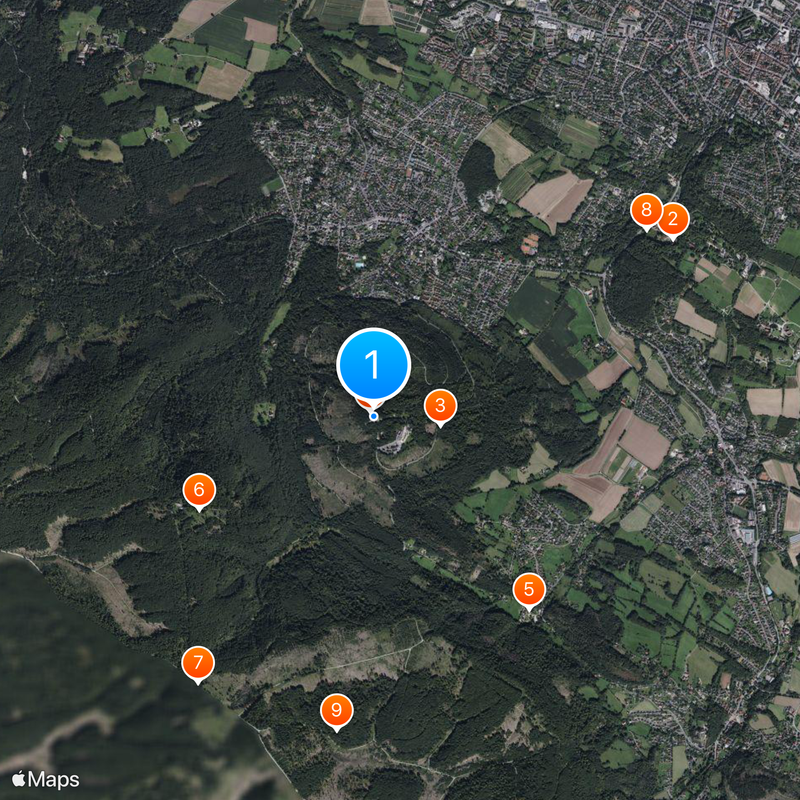
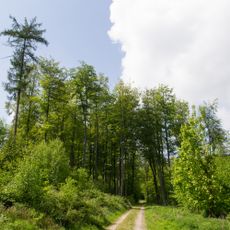
The climb follows a spiral staircase with 75 steps inside the pedestal that leads to an observation platform. The site sits on Grotenburg hill and can be reached on foot through forest paths or by car.
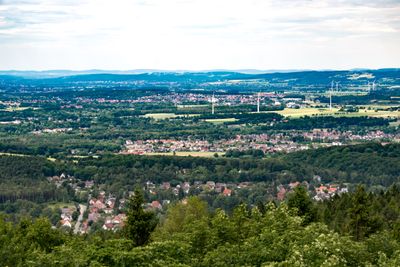
The sword tip points west toward the direction from which the Roman troops approached. On clear days, the observation point offers views of Köterberg, the highest peak in the Weser Uplands.
The community of curious travelers
AroundUs brings together thousands of curated places, local tips, and hidden gems, enriched daily by 93,586 contributors worldwide.