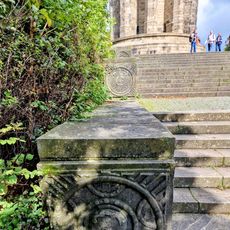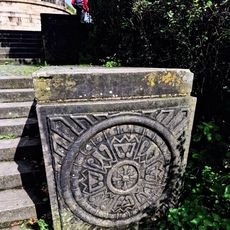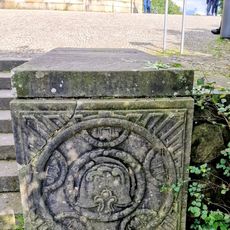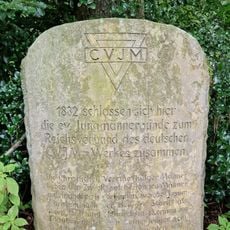
Grotenburg, Cultural heritage monument and castle in Detmold, Germany.
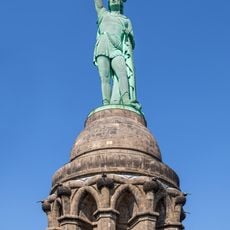
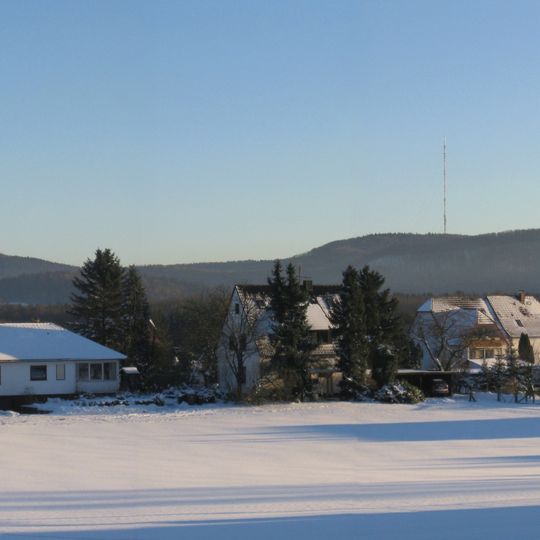
Grotenburg is a 386-metre forested mountain in the Teutoburg Forest, 1.5 km south of Detmold-Hiddesen. On its summit, just below the car park, are the remains of a late Iron Age ring wall called the Großer Hünenring, within which the Hermannsdenkmal was built between 1838 and 1875. The smaller Kleiner Hünenring, a medieval earthwork, lies by the access road.
The summit holds the Großer Hünenring, a ring-wall fortification from the late pre-Roman Iron Age; the name Grotenburg means "great castle" and refers to these walls. The smaller Kleine Hünenring, a medieval rampart, lies by the access road. When the Hermannsdenkmal was built between 1838 and 1875 inside the larger ring, stones from the wall were reused, leaving it only partly preserved.
The name Grotenburg means "great castle" and refers directly to the ring-wall remains on the summit, visible just below today's car park. The larger of the two walls is called the Großer Hünenring, a late pre-Roman Iron Age hillfort; the Kleiner Hünenring, a medieval rampart, lies on the approach road to the monument grounds.
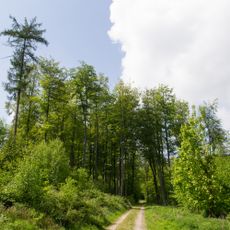
Several marked paths lead to the summit, most reserved for hikers, cyclists and forestry traffic; the Hermannsweg from Detmold is the direct route. The Hindenburgstraße from Hiddesen is a two-lane road to the paid car park just below the Hermannsdenkmal, with a free hikers' car park at the start of the one-way Denkmalstraße, which descends toward Schling at a 20% gradient.
The name Grotenburg means "large castle" and refers directly to the ramparts on the summit, not to the Hermann Monument. Stones from the wall were reused in the monument's construction between 1838 and 1875, damaging it so that it survives only in part. The smaller Kleine Hünenring, a medieval earthwork, lies by the access road to the summit.
The community of curious travelers
AroundUs brings together thousands of curated places, local tips, and hidden gems, enriched daily by 94,410 contributors worldwide.