Göltzsch Viaduct, Railway viaduct in Reichenbach im Vogtland, Germany.
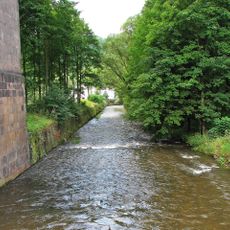
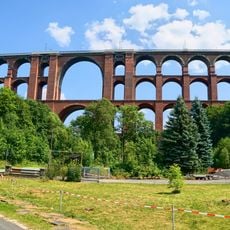
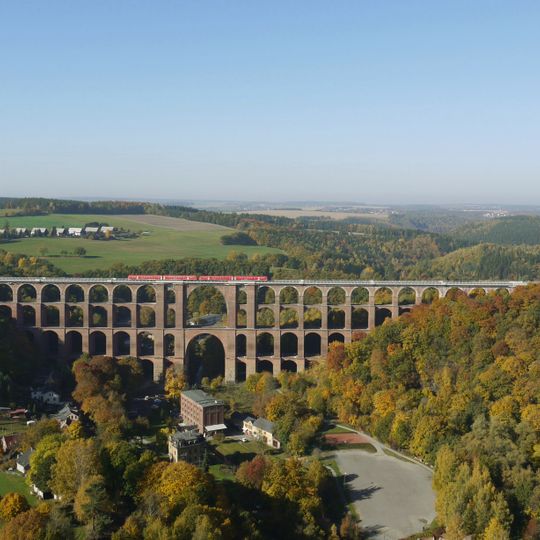
The Göltzsch Viaduct is a double-track railway bridge of reddish-brown brick spanning the Göltzsch valley between Mylau and Netzschkau. It is the world's largest brick bridge, with 98 arches and a height of 78 metres. The deck carries a continuous band of lighter masonry with a low parapet, and the piers are opened by lower arches near the ground.
Construction started in 1846 under architect Johann Andreas Schubert's plans and finished in 1851, requiring millions of bricks from regional suppliers across the region. The bridge was built to serve the growing railway connection between Leipzig and Hof.
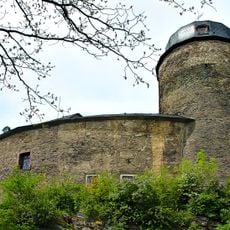
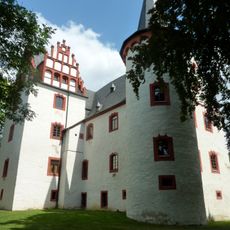
The bridge's name comes from the Göltzsch valley it crosses, between Mylau and Netzschkau. A room in Mylau Castle, a museum since 1883, holds a scale model of the wooden scaffolding, copies of the original plans and photographs and paintings made during construction. The open space in front of the bridge is used for open-air events.
Visitors can view the viaduct from several viewpoints located in the valley below, which offer free access and clear sightlines. The best vantage point is often from ground level, where you can see the full scale and depth of the structure.
The bridge's mortar was not standard: Reichenbach pharmacist Heinrich Carl developed a mix of lime, sand, brick dust, alum-slate slag and water for the project. The scaffolding alone consumed 23,000 tree trunks, by some accounts 230,000.
The community of curious travelers
AroundUs brings together thousands of curated places, local tips, and hidden gems, enriched daily by 92,750 contributors worldwide.