Königstein Fortress, Military museum in Saxon Switzerland, Germany
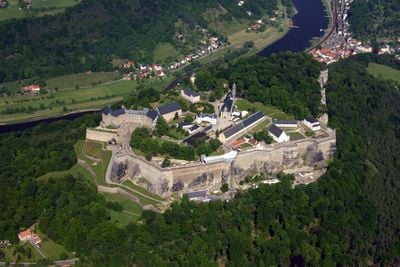
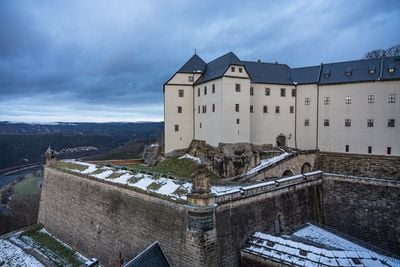
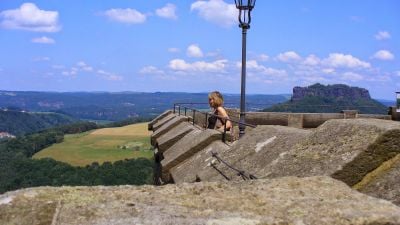
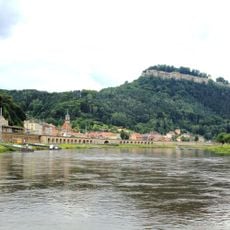
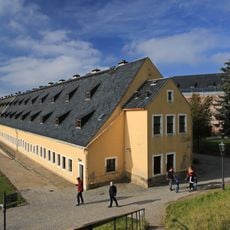
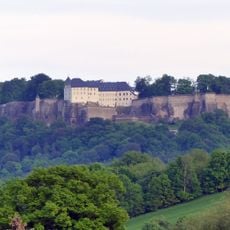
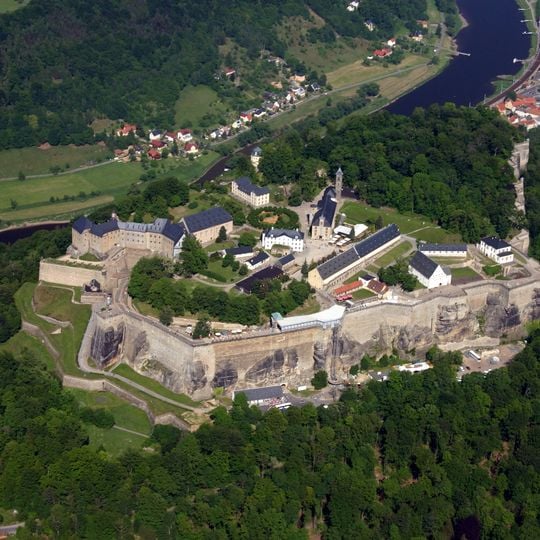
Königstein Fortress is a hilltop fortification above the Elbe in Saxon Switzerland, built on a 9.5-hectare table rock whose pale sandstone cliffs form much of its base. Grey stone ramparts 1,800 metres long, with walls up to 42 metres high, enclose over 50 buildings, among them the Gatehouse, the Old Barracks and the Magdalenenburg.
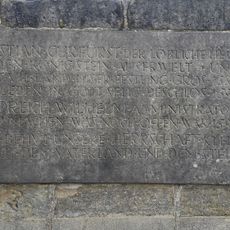
A 1233 deed of King Wenceslas I of Bohemia names a "Burgrave Gebhard of Stein" as witness, the oldest written record of a castle here; the 1241 Upper Lusatian Border Charter first calls it Königstein. The Treaty of Eger of 25 April 1459 transferred it to the Margraviate of Meissen. From 1589 Elector Christian I had it rebuilt as Saxony's strongest fortress; it became a museum in 1955.
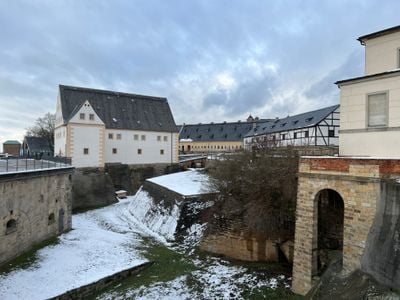
The name comes from the sandstone rock on which it stands and the compound served as a refuge for Saxon rulers during times of war. Visitors today walk through the casemates, enter former armories and cross the old garrison quarters, where each room shows how soldiers lived and worked over centuries.
The fortress is best reached on foot or by bus from the village of Königstein, with a short climb leading to the entrance. Sturdy shoes are helpful because the interior consists of cobblestones and uneven courtyards.
The well was sunk between 1563 and 1569 under Conrad König, reaching 152.5 metres into the rock; until then the garrison relied on cisterns and rainwater. Each day of drilling, some 8 cubic metres of water had to be hauled out of the shaft alongside the cut stone. In the late 18th century it was known as the Augustusbrunnen.
The community of curious travelers
AroundUs brings together thousands of curated places, local tips, and hidden gems, enriched daily by 92,522 contributors worldwide.