Biebrich Palace, Royal palace in Biebrich district, Wiesbaden, Germany.
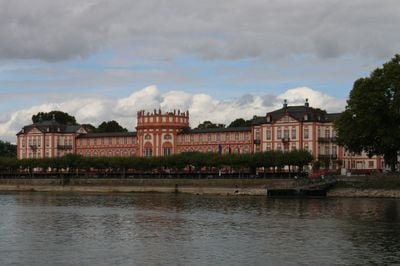
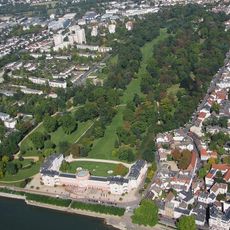
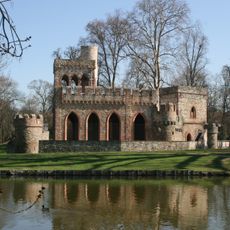
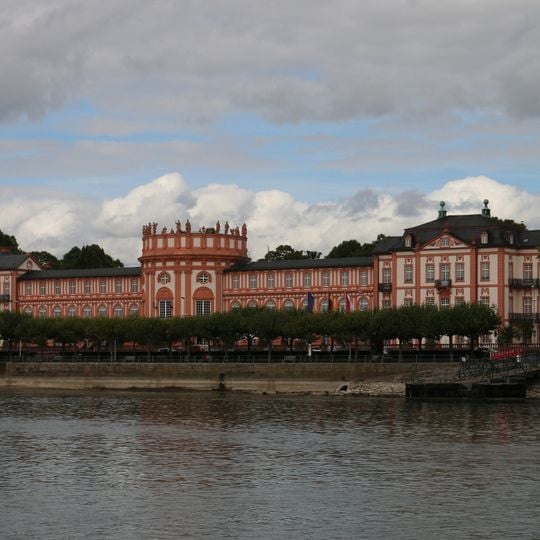
Biebrich Palace is a baroque structure with three wings extending along the Rhine, topped by a central rotunda decorated with statues of ancient gods. A large English landscape garden surrounds the buildings, offering open green spaces for walking and exploration.
Prince Georg August Samuel of Nassau-Idstein had a garden house built on the Rhine in 1696, which Julius Ludwig Rothweil expanded into a small residential palace by 1703. A second pavilion followed in 1704–1706, and Maximilian von Welsch linked the two with a rotunda and galleries by 1721. From 1734 Friedrich Joachim Stengel added the east and west wings; Prince Karl moved his residence here in 1744. The palace remained the Nassau main residence until Wiesbaden's city palace was completed in 1841.
The palace's rotunda, galleries and the ground floors of the pavilions serve as a backdrop for receptions by the Hessian state government and other authorities, and the rotunda also functions as a municipal registry office. The palace park on the side facing away from the Rhine hosts a well-known equestrian tournament each year at Pentecost.
The palace stands directly on the Rhine bank in Biebrich, with the park on the side facing away from the river. The wings and rotunda are used for state receptions and as a registry office, so interiors are generally not open for tours. The park hosts an equestrian tournament at Pentecost.
The palace's two outer pavilions were built 86 metres apart: the west pavilion for Prince Georg August Samuel from 1701 to 1703 by Julius Ludwig Rothweil, and an identical east pavilion for his wife in 1704 to 1706. Maximilian von Welsch joined them with a central rotunda and galleries from 1707.
The community of curious travelers
AroundUs brings together thousands of curated places, local tips, and hidden gems, enriched daily by 92,828 contributors worldwide.