Lower Silesia Province, Historical region in southwestern Poland
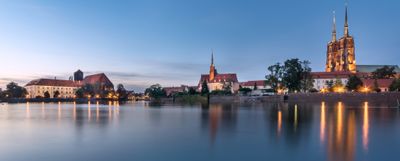
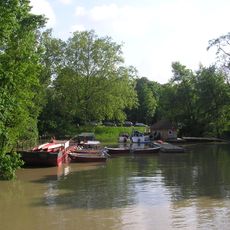
Lower Silesia is a historical region in southwestern Poland with diverse landscapes. The territory stretches from mountains in the south to flatter areas and is crossed by several rivers that shape a green and varied countryside.
The region changed hands multiple times over the centuries, first under Bohemia, then Austria, and later Prussia. After World War II it became part of Poland in 1945, with many residents leaving and new people settling there.
The province was confessionally mixed: Lower Silesia, with its capital Breslau, was predominantly Protestant, while Upper Silesia was over 90 percent Catholic. The Polish-speaking population made up only a small percentage of Lower Silesia's inhabitants. About a third of Germany's linen weaving mills stood in Lower Silesia, often run on the countryside by descendants of traditional weavers.
The province was divided into two administrative regions, Breslau and Liegnitz, with Breslau as capital. Its territory reached beyond the historical region of Lower Silesia: it included the Upper Lusatian districts of Görlitz, Rothenburg and Hoyerswerda, which had belonged to Saxony until 1815, and the former County of Kladsko in the southeast. After 1945 the Oder–Neisse line split the area, the eastern part falling to Poland and the smaller western part to Saxony and Brandenburg.
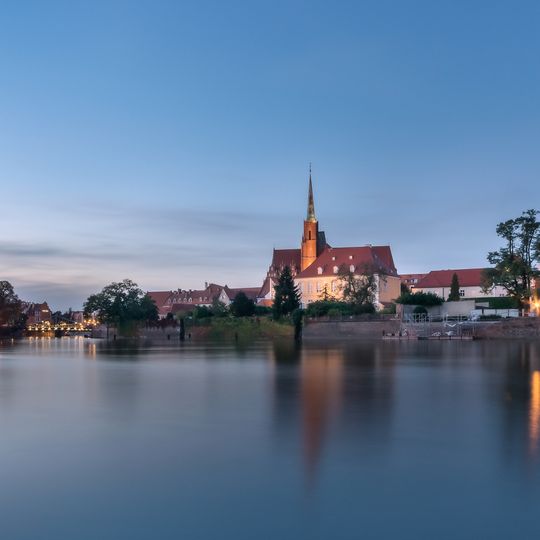
The province did not match the historical region of Lower Silesia: it also took in the Upper Lusatian districts of Görlitz, Rothenburg and Hoyerswerda, which had belonged to the Kingdom of Saxony until 1815, and the former County of Kladsko in the southeast. Its capital was Breslau, today Wrocław in Poland.
The community of curious travelers
AroundUs brings together thousands of curated places, local tips, and hidden gems, enriched daily by 93,363 contributors worldwide.