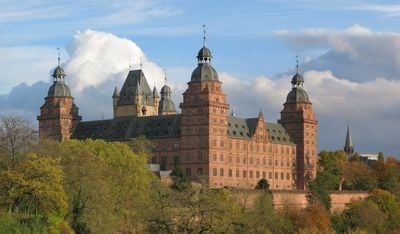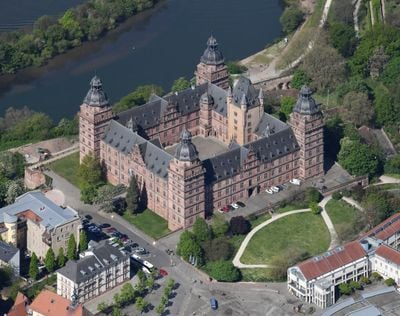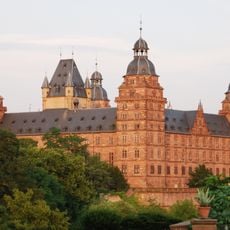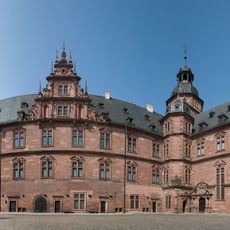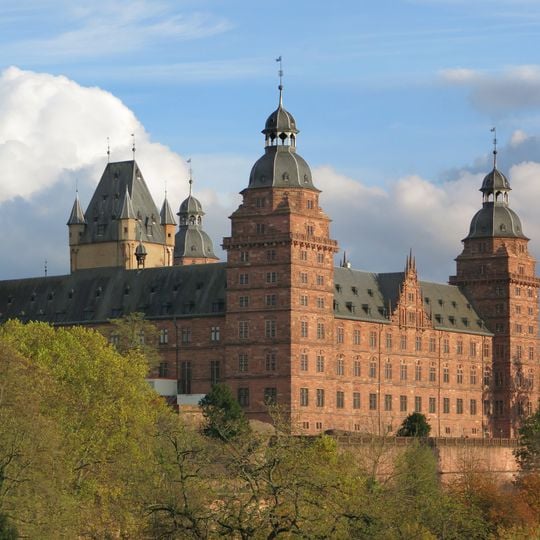
Schloss Johannisburg, Renaissance palace in Aschaffenburg, Germany
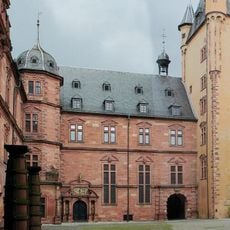
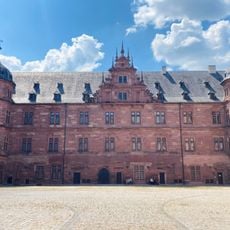
Schloss Johannisburg is a large four-winged palace complex built from red sandstone with symmetrical towers capped by distinctive octagonal upper levels. The rooms inside contain historical furnishings, paintings, and art collections, including works by Lucas Cranach the Elder and religious objects from Mainz Cathedral.
A 14th-century castle on this site was burned down on 10 August 1552 by troops of Albert Alcibiades, Margrave of Brandenburg-Kulmbach. Johann Schweikhard von Cronberg commissioned the present palace in 1604, and Georg Ridinger built it from 1605 to 1614, incorporating the old Gothic keep. US artillery nearly destroyed it in the final days of World War II; rebuilding began in 1951 and took over twenty years.
The palace reflects the tastes and power of the Mainz archbishops who once lived here, visible in the fine furnishings and religious artworks throughout the rooms. These ecclesiastical rulers expressed their authority through the splendor of the building and its interior decorations.
The complex is easy to explore on foot, and signs guide visitors through the rooms. Comfortable shoes are recommended since floors in older sections can be uneven.
Court confectioner Carl May and his son built the cork models after 1792; the largest, a model of the Colosseum three metres in diameter, is the biggest cork model in the world. The collection is displayed in the palace alongside the city museum's collections since 1972.
The community of curious travelers
AroundUs brings together thousands of curated places, local tips, and hidden gems, enriched daily by 92,884 contributors worldwide.