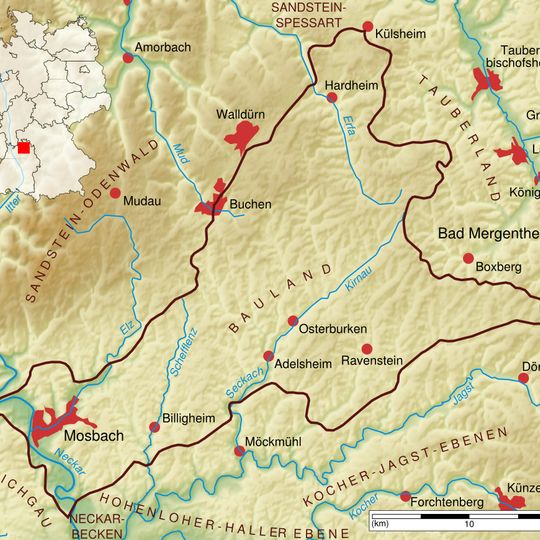
Bauland, Natural region in northeastern Baden-Württemberg, Germany
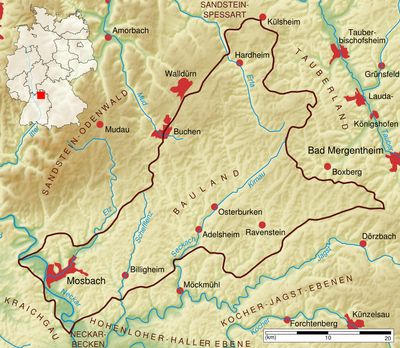
Bauland is a natural region in northeastern Baden-Württemberg, located between the Odenwald forest and three rivers: Tauber, Jagst, and Neckar. The landscape features limestone formations and karst phenomena, with the Eberstadt Cave system and its extensive underground chambers forming a notable natural feature.
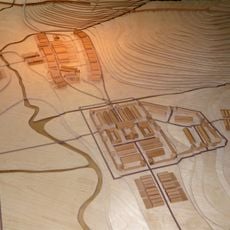
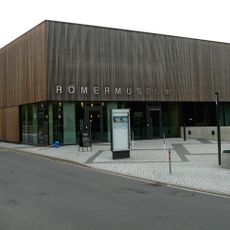
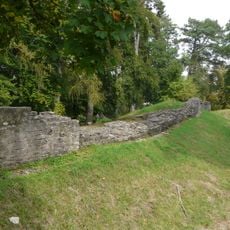
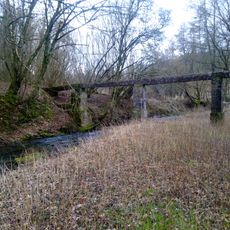
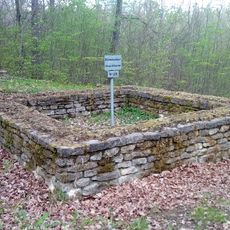
The name Bauland derives from the Middle High German term Ponland, referring to the area's medieval suitability for bean cultivation. The region was part of the Roman frontier, as sections of the Upper Germanic-Rhaetian Limes demonstrate, marking the ancient imperial border.
The region is known for growing spelt and especially Grünkern, an immature grain harvested green that has been cultivated here for generations. This farming tradition shapes the landscape and local identity today.
The region is good for hiking through varied landscapes with limestone formations and open fields. Those visiting the Eberstadt Cave should be prepared for uneven terrain and the cool temperatures found in underground spaces.
The term "Grünkern" for the immature spelt variety arose from roasting the green grain, a process that gave the region a distinctive culinary reputation. This specific grain product is found almost nowhere else in Germany.
The community of curious travelers
AroundUs brings together thousands of curated places, local tips, and hidden gems, enriched daily by 60,000 contributors worldwide.