Berlin Museum of Medical History at the Charité, Medical history museum at Charité Campus Mitte, Germany
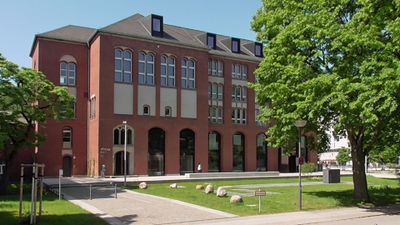
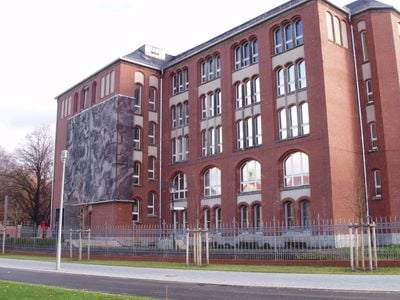
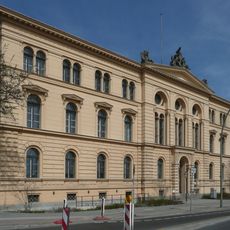
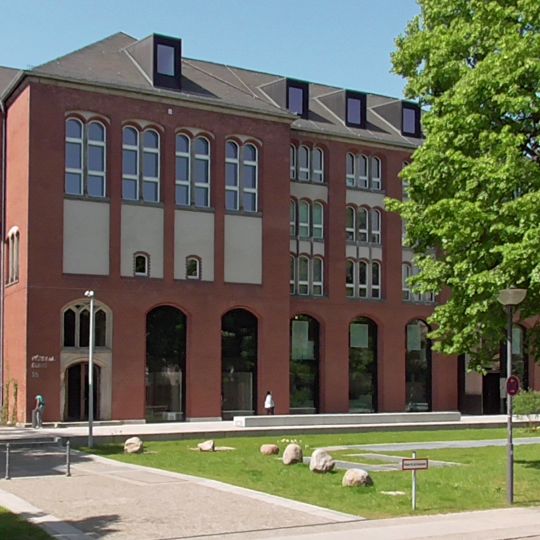
The Berlin Museum of Medical History at the Charité occupies a red-brick building on Charitéplatz 1 in Berlin-Mitte, with tall arched windows in pale stone frames and a grey marble-patterned corner block. Its roughly 800 m² permanent exhibition opened in October 2007 and holds about 900 pathological-anatomical specimens, including 40 of the original 3,300 preparations of anatomist Johann Gottlieb Walter (1734–1818).
Rudolf Virchow opened the Pathological Museum on 27 June 1899 in a building on the Charité grounds, showing 23,066 preparations in glass cases across five floors and 2,000 m². Public access ended in 1914, and about 1,800 preparations survived the Second World War. After reunification the decision was taken to create a broad medical-history museum rather than a purely pathological one, and it opened in 1998.
The museum shows how medicine changed over centuries and how doctors once practiced their craft. The preserved rooms like the anatomical theater and old lab spaces reveal how different medical practice looked in earlier times.
The museum stands on the Charité Mitte campus at Charitéplatz 1, a 10–15 minute walk from the S-Bahn station in Berlin Hauptbahnhof, across the Spree. Exhibitions occupy four floors of a free-standing building, so allow time for stairs and several rooms. The museum reopened in June 2023 after expansion work begun in February 2020.
The Berlin Anatomical Theater of the 18th century was rebuilt inside the museum and opens the permanent exhibition, which has occupied 800 m² since October 2007. Among the specimens are 40 of the original 3,300 preparations of the anatomist Johann Gottlieb Walter (1734–1818).
The community of curious travelers
AroundUs brings together thousands of curated places, local tips, and hidden gems, enriched daily by 92,828 contributors worldwide.