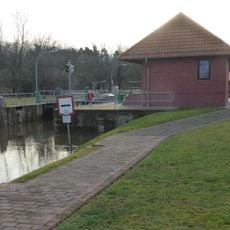
Sépulture de Bad Dürrenberg, Mesolithic burial site in Bad Dürrenberg, Germany.
The burial site near Bad Dürrenberg holds the remains of a woman and an infant laid together in a rectangular grave filled with red ochre powder. Placed with them were a worked deer antler and more than fifty pierced animal teeth, indicating these items held significance for the burial ceremony.
Workers discovered this burial in 1934 while laying water pipes near the Saale River, leading to investigation of the archaeological site. The grave dates to around 6500 BC, placing it within the early settlements of the region after the last ice age ended.
The grave goods reveal how people expressed meaning through objects and ritual. Red ochre powder, a worked deer antler, and dozens of pierced teeth as ornaments show that care and intention shaped how this community honored their dead.
The site is typically presented through an exhibition or interpretive display rather than an open dig area, since the actual grave remains underground. Taking time to read the information about the objects and their positions helps you understand the burial arrangement.
Scientific analysis of the remains revealed the woman had blue eyes with dark skin and hair, providing a direct window into how people actually looked in Central Europe thousands of years ago. This mix of features demonstrates that such physical variety existed among early populations.
The community of curious travelers
AroundUs brings together thousands of curated places, local tips, and hidden gems, enriched daily by 92,660 contributors worldwide.