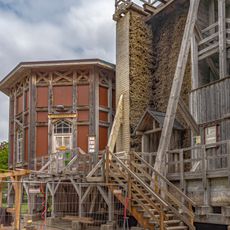
Borlachmuseum, Salt museum in a brine shaft tower in Bad Dürrenberg, Germany
The Borlachmuseum is a heritage museum in Bad Dürrenberg dedicated to the history of salt production in the region. The collections display tools, equipment, and devices that were used in salt extraction and processing.
The Borlachschacht was sunk to a depth of 223 metres with a 3.00 × 3.00 m cross-section lined in oak, enabling brine extraction at Bad Dürrenberg. The shaft is named after Johann Gottfried Borlach, the electoral Saxon mining councillor who drove the project. From 1811 to 1816 Georg Hartmann von Witzleben, appointed saline director in Dürrenberg in 1801, had a second hoisting tower built, later named the Witzlebenturm; a cross-shaft once linked both structures to raise more brine.
The museum is named after Johann Gottfried Borlach, the Saxon mining official who enabled brine extraction at Bad Dürrenberg. Its displays include salt hooks, boiling baskets and salt shovels, and models of the old water-lifting works. Next door, the Witzlebenturm holds a replica steam engine shown on certain occasions.
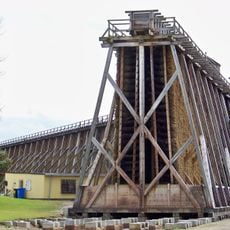
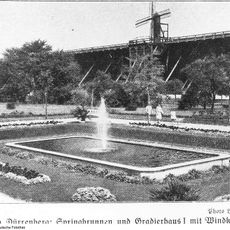
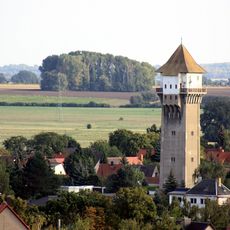
The museum occupies the Borlachturm, the former winding tower of the 223-metre Borlach shaft, next to the Gradierwerk and the adjoining Witzlebenturm. The Witzlebenturm holds a replica steam engine shown on certain occasions. The tower stands above the Saale and also appears in the town's coat of arms.
The tower is named after Johann Gottfried Borlach, the Saxon mining official who enabled brine extraction here; the shaft he sank is 223 metres deep, lined with oak and 3 by 3 metres in section. Bad Kösen also has a Borlachturm, over a 175-metre shaft dug between 1731 and 1735.
The community of curious travelers
AroundUs brings together thousands of curated places, local tips, and hidden gems, enriched daily by 93,975 contributors worldwide.