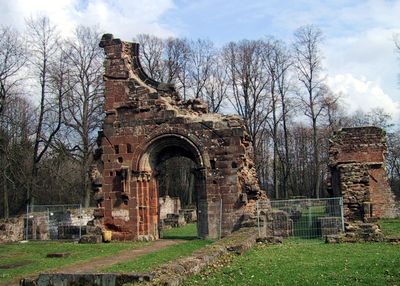
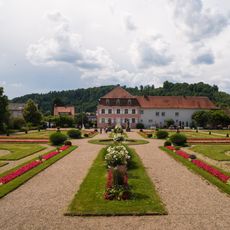
Wörschweiler Abbey, Cistercian monastery ruins in Homburg, Germany.
Wörschweiler Abbey is a Cistercian monastery whose stone ruins sit on Marienberg mountain and display medieval construction methods. The preserved walls and foundations reveal how monks organized their religious community and the scale of their buildings.
Founded in 1131 by Count Friedrich I of Saarwerden and his wife Gertrud on the site of a Roman complex called Gloria Romanorum, the abbey was first settled by Benedictine monks from Hornbach. In 1171 it was taken over by Villers-Bettnach Abbey and became a Cistercian daughter house. It was dissolved in 1558 by the Protestant Duke of Palatinate-Zweibrücken and destroyed by fire in 1614.
The name Wörschweiler derives from the Latin Verneri-Villerium used in the abbey's own documents; older literature also writes Werschweiler. The monastery held a grange at Münchwies, and after the 1558 dissolution abbots of Villers-Bettnach continued to be appointed for its Lorraine possessions. Many grave slabs found on the site are kept in the Römermuseum Schwarzenacker.
The site is accessible year-round and sits on a hillside, so expect uneven terrain when walking around. Sturdy shoes and time to explore the walls and surrounding landscape are recommended.
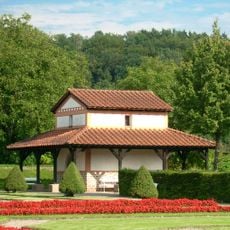
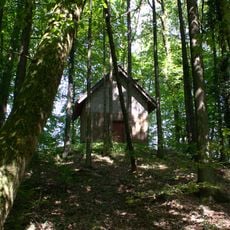
The cloister's fountain house was unusually small and fed by a well rather than a spring. A drawing from 1810 also records a man-made mound 28 to 30 feet high near the first gate, possibly a defensive work or a Roman tomb.
The community of curious travelers
AroundUs brings together thousands of curated places, local tips, and hidden gems, enriched daily by 93,081 contributors worldwide.