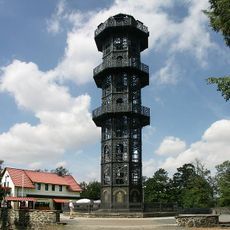
King-Friedrich-August-Tower, Cast iron observation tower on the Löbauer Berg in Löbau, Germany
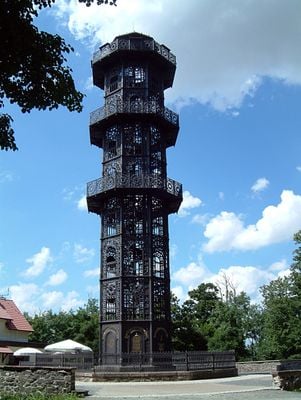
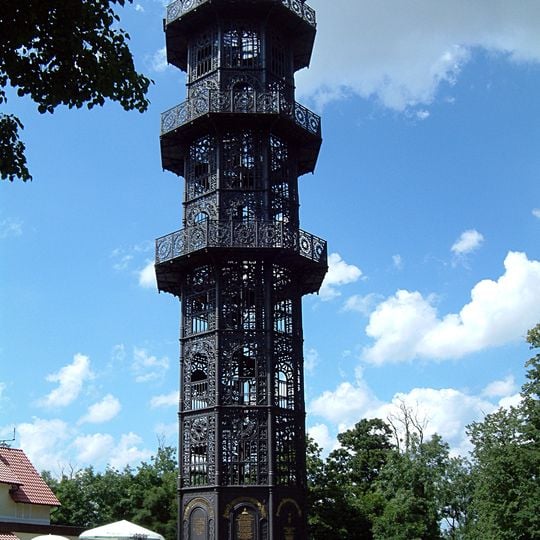
The King Frederick Augustus Tower is a 28-metre cast iron tower on the Löbauer Berg, assembled in 1854 from about 1,000 cast parts weighing some 70 tonnes. Its octagonal shaft, only 4 metres across at the corners, rises through openwork panels to galleries at 12, 18 and 24 metres. Inside, a 116-step spiral staircase leads up; the top is covered by a wooden roof hood.
The structure was built in the mid-19th century as a tribute to King Frederick Augustus II of Saxony and was completed quickly after construction began. It marked the growing use of cast iron in European architecture during that era.
The tower emerged during an era when technical structures rose across Europe and remains protected as a heritage monument today. Visitors can observe how 19th-century society valued and preserved innovative engineering works.
The tower sits atop the hill and is reached via a clearly marked path from below. The internal stairs are narrow and steep, so sturdy footwear is essential and those with mobility concerns should plan accordingly.
This tower ranks among Europe's oldest surviving iron towers and demonstrates construction methods rarely documented elsewhere. Its assembly reveals early techniques for joining cast iron parts that shaped engineering practices of that period.
The community of curious travelers
AroundUs brings together thousands of curated places, local tips, and hidden gems, enriched daily by 94,624 contributors worldwide.