Landesmuseum Mainz, State museum in Mainz, Germany.
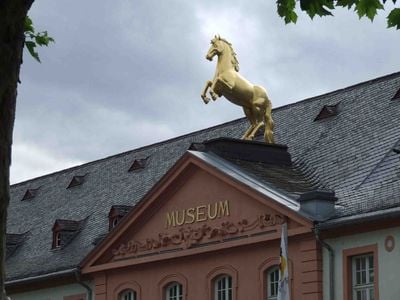
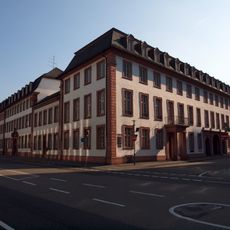
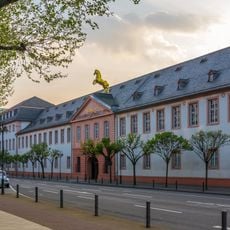
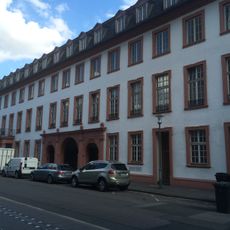
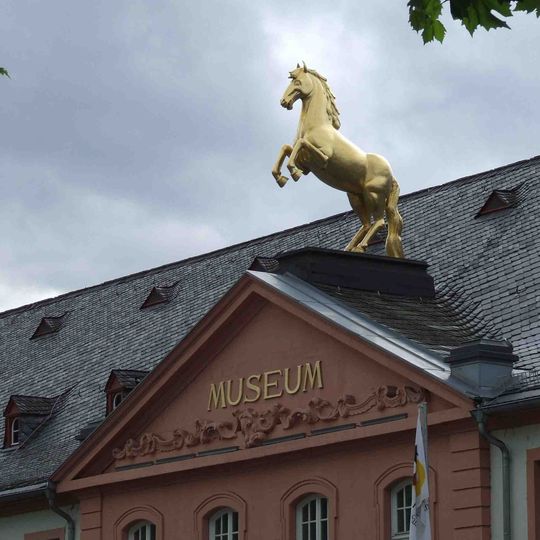
The Landesmuseum Mainz occupies the former electoral stables on Große Bleiche, a building known as the Golden-Ross-Kaserne for the oversized golden horse on its roof. Its collections range from a Venus-like figurine dated to 23,000 BC and Roman stone monuments to paintings by Picasso and Max Slevogt.
In 1803 Napoleon Bonaparte gave the city of Mainz 36 paintings to found a gallery, shown with church altarpieces and Roman stone monuments. The collection grew through the 19th century, absorbing the city's print cabinet and, in 1903, Adolf Laské's gift of some 13,000 graphic works. In 1937 the antiquities museum moved into the former electoral stables on Große Bleiche, and in 1967 the state merged the antiquities museum, painting gallery and graphic collection into the Mittelrheinisches Landesmuseum, renamed Landesmuseum Mainz in 1986.
The building is nicknamed "Golden-Ross-Kaserne" after the oversized gilded horse on its roof, and the name stuck from its 19th-century use as a barracks. In the courtyard, redesigned in 2014, changing contemporary sculptures are shown, and the space also serves museum-education events during special exhibitions.
The museum is located downtown and is easy to reach by public transport or on foot. Visitors should note that opening hours vary by weekday and it is recommended to check current times before visiting.
The building is the former electoral stables (Marstall) on Große Bleiche, long nicknamed the "Golden-Ross-Kaserne" after the over-life-size golden horse on its roof. In the 19th century it served as a barracks, and the museum moved in only in 1937. The collections survived the Second World War because they had been evacuated in time.
The community of curious travelers
AroundUs brings together thousands of curated places, local tips, and hidden gems, enriched daily by 93,832 contributors worldwide.