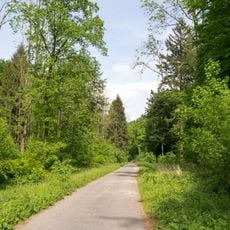
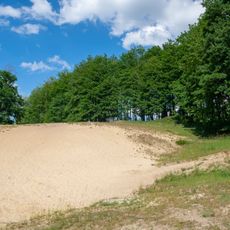
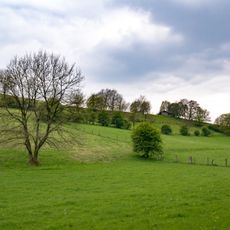
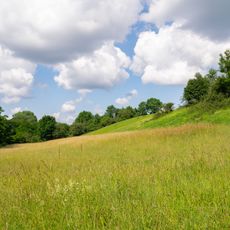
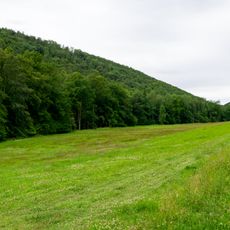
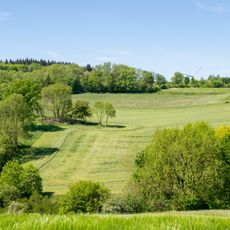
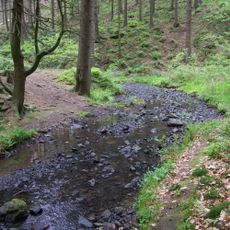
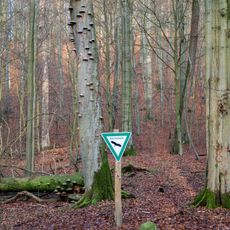
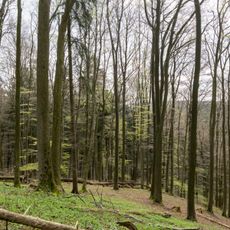
Bielsteinhöhle mit Lukenloch, Protected nature reserve in Horn-Bad Meinberg, Germany.
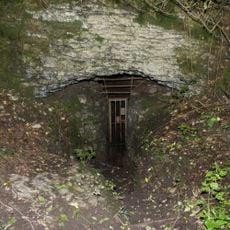
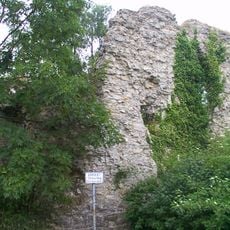
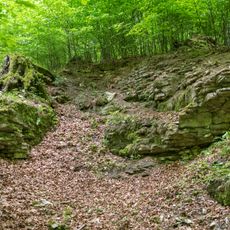
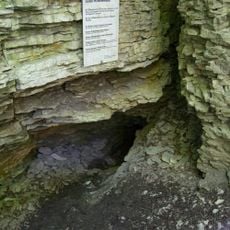
Bielsteinhöhle mit Lukenloch is a 18.9-hectare nature reserve (LIP-020) between Veldrom and Schlangen. Its Bielsteinschlucht is a 300-metre collapse doline curving from southwest to north, with pale, fissured limestone walls up to 15 metres high. At its rear lies the 42-metre Bielsteinhöhle; the separate Lukenloch is a 26-metre-deep funnel-shaped cave.
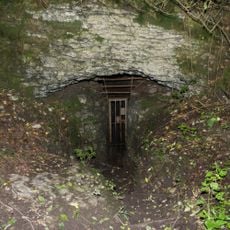
The Bielsteinschlucht, a collapsed doline about 300 m long with walls of pale, heavily fissured limestone up to 15 m high, served as a refuge and settlement site in prehistoric times. The roughly 42 m long Bielsteinhöhle at its rear and the 26 m deep Lukenloch are both listed as archaeological monuments in Horn-Bad Meinberg's register. The caves are used by bats such as the pond bat and the greater mouse-eared bat, which winter in the cold air collecting in the Lukenloch.
The gorge walls of pale, fissured limestone were used as a refuge and settlement site in prehistoric times, and both caves are listed as archaeological monuments of Horn-Bad Meinberg. The Bielsteinhöhle shelters bats such as the pond bat and the greater mouse-eared bat, which is why it stays closed from September to May.
Access to the cave is closed from September through May to protect bats during their hibernation period. Summer visitors should stay on marked trails and take care not to disturb the delicate environment.
The name Lukenloch refers to the funnel-shaped opening at the surface through which cold air sinks into the deeper sections below. This natural ventilation system creates conditions that allow bats to use specific zones within the cave for overwintering.
The community of curious travelers
AroundUs brings together thousands of curated places, local tips, and hidden gems, enriched daily by 93,850 contributors worldwide.