Theater am Kurfürstendamm, Theatre in Charlottenburg district, Berlin, Germany
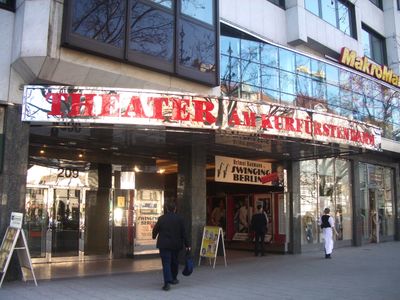
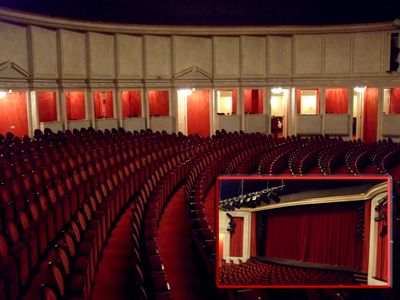
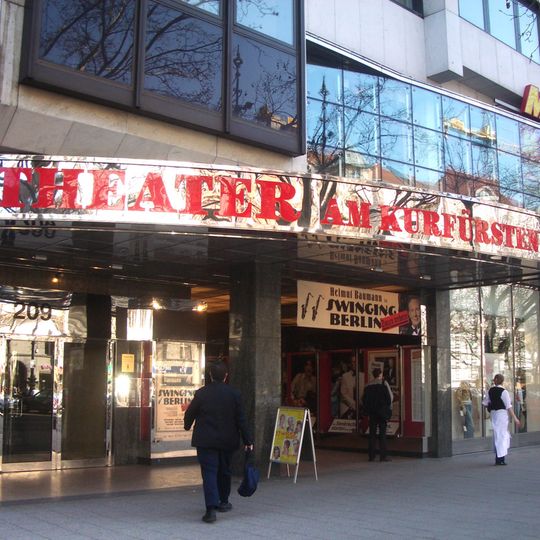
Theater am Kurfürstendamm was a private playhouse in the Ku'damm-Karree on the Kurfürstendamm, in Berlin's Charlottenburg-Wilmersdorf district. Oskar Kaufmann converted the former rooms of the Berliner Secession into the theatre, which opened in 1921. Its mirrored marquee sign read THEATER AM KURFÜRSTEN above a recessed entrance with two dark polished columns. The auditorium had tiers of dark red upholstered seats and beige wall panels with deep red recesses. The building was demolished in 2018.
The house opened in October 1921 and initially served as a venue for operetta and revue theater with popular productions. After heavy damage from bombing raids in 1943, it was rebuilt in the postwar years and later refocused as a spoken drama theater.
The name refers to the Kurfürstendamm, the boulevard where the theatre stood until its demolition in 2018. Its auditorium was described in 1921 as a "Moorish Rococo" interior, with coloured ceiling paintings and mosaics by César Klein. The house was a private theatre, run from 1933 to 1942 by Hans Wölffer and later by his son Jürgen and grandson Martin.
The theatre no longer stands on the Kurfürstendamm: the Ku'damm-Karree building was demolished in 2018. The Komödie am Kurfürstendamm company moved to the Schiller Theater that year, used the Theater am Potsdamer Platz from March 2023 to May 2025, and has played the Ernst-Reuter-Saal in Reinickendorf since June 2025 while the new house is built.
The Berlin premiere of Brecht and Weill's Rise and Fall of the City of Mahagonny took place here shortly after Max Reinhardt reopened the house in 1931, not in 1930. The same stage saw the 1932 world premiere of Eduard Künneke's operetta Glückliche Reise, sung by Lizzi Waldmüller.
The community of curious travelers
AroundUs brings together thousands of curated places, local tips, and hidden gems, enriched daily by 94,370 contributors worldwide.