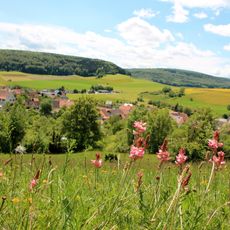
Blauer Stein, Volcanic mountain in Hegau region, Baden-Württemberg, Germany.
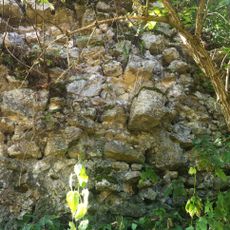
Blauer Stein is a volcanic cone in the Hegau region with dark basalt rock formations that rise distinctly from the surrounding landscape. The mountain displays the geological characteristics typical of this southwestern German area.
The formation was created through volcanic activity millions of years ago and is part of a series of volcanic cones that define the Hegau landscape. This rock formation documents a period of ancient magmatic activity in the region.
The name comes from the anthracite colour of the rock, which reads as blue, though weathering turns the outer layer grey-brown. Visitors often pick out faces in the hexagonal basalt columns, especially in dense fog. The Riedöschingen carnival club "Narrenverein Blauer Stein 1973 e. V." takes its name from the columns.
The rock sits at about 836 metres above sea level near the village of Randen, above Blumberg. The columns stand up to twelve metres high and are best seen where erosion has exposed them; the outermost layer is weathered grey-brown rather than blue. The site is a protected natural monument and a local recreation area, so expect a short walk from the Randen area rather than a marked summit trail.
The mountain is part of a group of over 40 volcanic cones made primarily of basalt that pepper the Hegau landscape like an island chain. This geological setting makes the region a rare example of Tertiary volcanic activity in central Europe.
The community of curious travelers
AroundUs brings together thousands of curated places, local tips, and hidden gems, enriched daily by 94,160 contributors worldwide.