Imperial cathedral of Königslutter, Romanesque cathedral in Königslutter am Elm, Germany
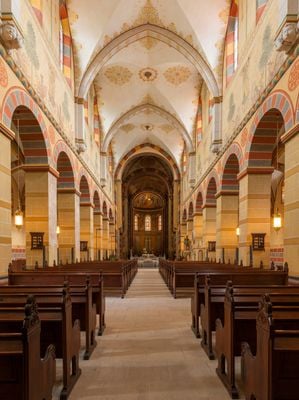
The Imperial Cathedral of Königslutter is a cruciform pillar basilica built of pale Elm limestone, 75 m long and 18 m high. Its west end has two towers with steep roofs, and an octagonal crossing tower rises between them. The interior has a nave with round-arched arcades, red and grey banded arches, and a vaulted ceiling painted with gold floral motifs.
A reigning emperor founded this structure in 1135, converting an earlier religious community into a Benedictine monastery. This transformation established the site as a major burial place for his family members.
The cathedral displays features influenced by northern Italian builders, particularly in its decorative details and wall patterns. Visitors can see how these southern European craftsmanship traditions shaped the building's appearance today.
The structure is open to visitors who can explore the interior at their own pace. It is best visited during stable weather since the stone interior remains cool even in warm seasons.
The north side aisle's Lion Portal, carved in the first building phase, is compared to sculpture in Ferrara, Verona and Piacenza, suggesting stonemasons trained in northern Italy worked here. On the exterior wall of the apse, the hunting frieze includes a central scene facing east that puzzles scholars: hares binding a hunter.
The community of curious travelers
AroundUs brings together thousands of curated places, local tips, and hidden gems, enriched daily by 94,459 contributors worldwide.