Kröpcke, square in Hannover, Germany
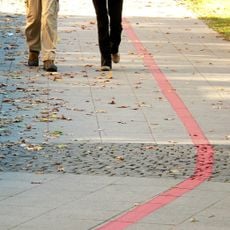
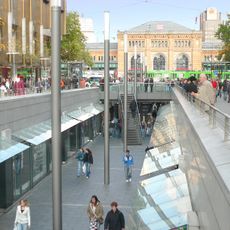
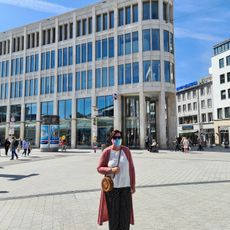
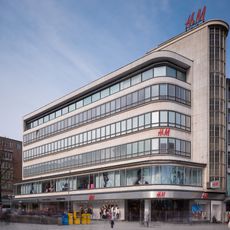
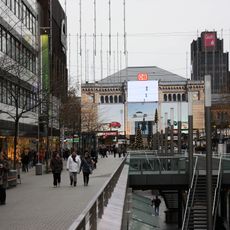
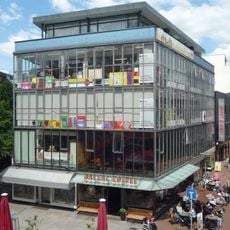
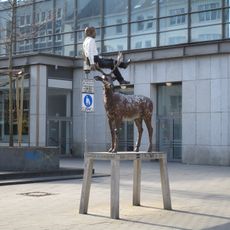
Kröpcke is a large central square in Hannover's Mitte district with cobblestones and stone slabs, surrounded by shops and buildings from different periods. The pedestrian-only square connects to an underground promenade called the Niki-de-Saint-Phalle-Promenade, which offers additional shopping and dining options beneath street level.
The crossing emerged in 1843 as a link between the old town and the new Central-Bahnhof. The first horse-drawn tram passed in 1872, and Hanover's first traffic light stood here in 1931. The name comes from Café Kröpcke, which Wilhelm Kröpcke took over in 1885 and renamed in 1895; the city officially named the square Kröpcke in 1948. The area was destroyed in World War II except for the clock.
The name comes from Wilhelm Kröpcke, a waiter from Bleckede who leased Café Robby in 1885 and renamed it Café Kröpcke in 1895. The café drew cultural and social circles, and the surrounding milieu was where serial killer Fritz Haarmann found his victims. The name passed from the café to the crossing, officially adopted in 1948. The Kröpcke clock is Hanover's traditional meeting point.
Kröpcke is a pedestrian crossing, so trams and buses no longer run above ground; the Stadtbahn station below is reached by stairs and escalators from the surrounding streets. All lines except two stop here, and the A and B lines cross on separate levels, so check the signs before descending. The Niki-de-Saint-Phalle-Promenade is entered from level -1.
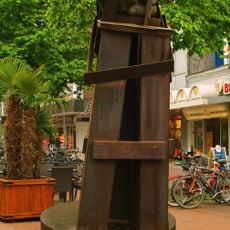
The clock is a 1977 simplified reconstruction of an 1885 meteorological column by Konrad Oertel, damaged in a 1943 air raid and repaired in 1945; a modern clock replaced it in 1954. Instead of weather instruments it now holds a display case for art exhibitions. The 1885 date often given for the clock is wrong.
The community of curious travelers
AroundUs brings together thousands of curated places, local tips, and hidden gems, enriched daily by 93,943 contributors worldwide.