Bruchsal Palace, Baroque palace in Bruchsal, Germany
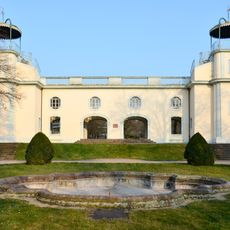
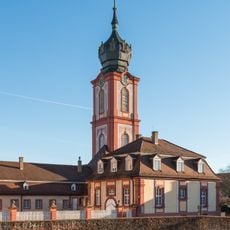
Bruchsal Palace is a baroque residence in the town of Bruchsal, built with multiple connected wings and ancillary structures forming an expansive courtyard complex. The layout includes residential chambers, an attached chapel, and numerous service buildings that supported daily operations and governance.
Construction began in the early 1700s under Prince-Bishop Damian Hugo Philipp von Schönborn, who envisioned it as a symbol of his spiritual and worldly authority. The complex was expanded and modified over the following decades to meet the changing needs of the episcopal court.
The palace is also called the Damiansburg after its builder, Damian Hugo Philipp von Schönborn, Prince-Bishop of Speyer. In the Kaisersaal, frescoes by Johannes Zick, finished in 1755, present the past, present and future of the Hochstift Speyer in the language of mythology. The Rococo interiors were largely made under his successor Franz Christoph von Hutten, with carvings by court cabinetmaker Ferdinand Hundt.
Plan to explore the complex on foot, moving between the different wings and structures, so comfortable shoes are a good idea for your visit. Check opening times and available tours ahead of time to make the most of your time there.
The palace houses two museums, including the German Museum of Mechanical Musical Instruments, which displays a collection of working automats and music boxes. This collection offers a rare glimpse into how people entertained themselves with mechanical music in past centuries.
The community of curious travelers
AroundUs brings together thousands of curated places, local tips, and hidden gems, enriched daily by 93,100 contributors worldwide.