Longwave transmitter Europe 1, Radio transmitter in Überherrn, Germany
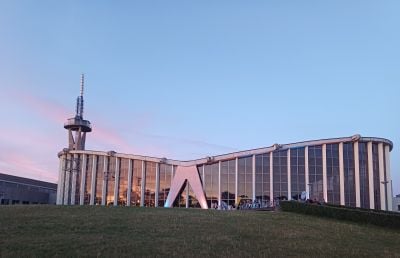
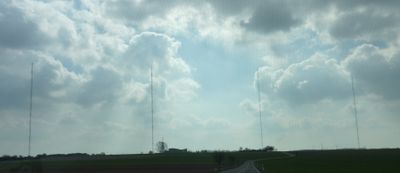
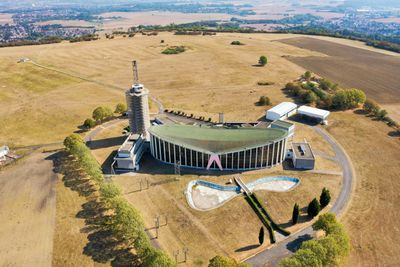
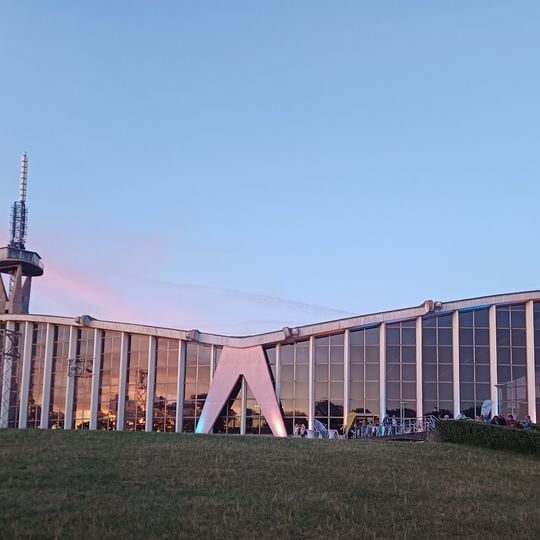
The Longwave transmitter Europe 1 stood on the western flank of the Sauberg (377 m) between Felsberg, Altforweiler and Berus. Its four guyed, insulated masts reached 270, 276, 280 and 282 metres, spaced about 350 m apart along a line and fed by feeder lines from the transmitter building. The 82 m long, 43 m wide and 16 m high hall from 1955 has a shallow-arched concrete shell roof; a telecommunication tower stands in front of it. The last masts were demolished in October 2020.
Planned under the Nazi regime as a wartime transmitter with a 170 m steel mast, the station was finally built in 1954 and began broadcasting on 1 January 1955 from the Saar Protectorate, so that a private station could serve France, where private broadcasting was then banned. Its four directional masts, 270 to 282 m tall, sent a signal received across France and even in North Africa. Mast 1 was moved 102 m on a transport wagon in 1959 to reduce interference with Reykjavík, Luleå and Ankara. After a mast section collapsed in 2012 and masts were demolished in 2013, the last four were blown up in October 2020.
The site's name comes from the villages of Felsberg and Berus that flank it, and locals still call it Sender Felsberg-Berus. Its four directional masts were aimed southwest so the French-language Europe 1 programme reached France and even North Africa, while reception northeast in Germany was poor or distorted. The 1955 transmission hall, 82 m long and 43 m wide, passed to the municipality of Überherrn on 1 October 2016.
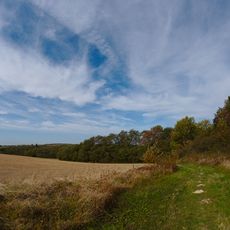
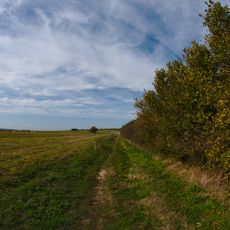
The masts were demolished in October 2020, so there is no transmitter to visit; the site lies in open country on the western flank of the Sauberg, between Felsberg, Altforweiler and Berus. The 1955 transmission hall, owned by the municipality of Überherrn since 1 October 2016, is the structure to look for. The French border runs about 750 m west, and the L 351 passes directly west of the grounds.
The concrete shell roof was the first of its kind worldwide for a building of this scale and set standards for innovative construction. This design allowed for an interior free of support columns, which was revolutionary for its time.
The community of curious travelers
AroundUs brings together thousands of curated places, local tips, and hidden gems, enriched daily by 92,842 contributors worldwide.