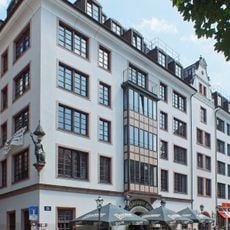
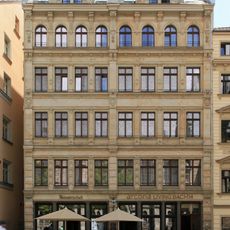
Bosehaus, Museum building at Thomaskirchhof, Germany.
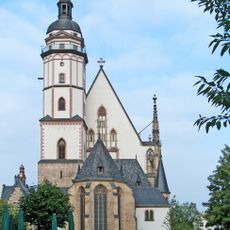
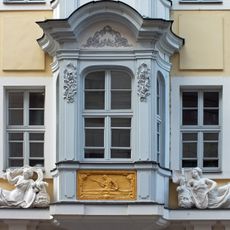
The Bosehaus is a Baroque townhouse built in 1710/1711 at Thomaskirchhof 16, diagonally opposite the south entrance of the Thomaskirche. Four wings enclose a rectangular courtyard about 10 by 17 metres; the four-storey front has six window axes, an oriel above the round portal and three dormers. The Bach Museum occupies the ground floor and first floor, the Bach Archive the upper floors, and a small 60 m² concert hall, the Sommersaal, sits on the second floor of the rear building.
Merchant Georg Heinrich Bose purchased a 16th-century building in 1710 and transformed it into a Baroque structure. Later, the house became home to the Bach Archive and remained a place of remembrance for the composer.
The Bach Archive Leipzig uses the building as a repository for manuscripts, letters, and personal items that document how Johann Sebastian Bach lived and worked in the city. Visitors can see these collections displayed throughout the rooms, gaining insight into his daily life and artistic practice.
The Bach Museum occupies the ground floor and first floor, while the archive and its library fill the upper storeys. The small Sommersaal on the second floor of the rear building seats an audience of about 60 m². The house stands on the south side of the Thomaskirchhof, diagonally opposite the south entrance of the Thomaskirche.
The Sommersaal, a hall of about 60 square metres on the second floor of the rear building, has an oval ceiling section painted by Adam Friedrich Oeser that can be raised. A balustrade is then revealed, producing particular acoustic effects. The hall dates from 1717.
The community of curious travelers
AroundUs brings together thousands of curated places, local tips, and hidden gems, enriched daily by 93,083 contributors worldwide.